Trishuli River Rafting Day Trip
- Duration
- 1 day
- Max altitude
- 400 m
- Difficulty
-
Easy
Difficulty scale
- Easy Short walking days on good trails below about 3,000 m. Suitable for anyone in ordinary health, including families.
- Moderate 5 to 6 hours a day with some steep sections, reaching up to about 4,000 m. A reasonable level of fitness and a few weeks of preparation walking recommended.
- Strenuous 6 to 8 hours a day, high passes or altitudes above 5,000 m, and remote stretches. Good fitness, prior trekking experience and proper acclimatisation days are essential.
- Very strenuous Long days, multiple high passes or technical sections, sustained time above 5,000 m. For experienced, well-conditioned trekkers only.
- Best season
- Autumn (Sep–Nov) · Spring (Mar–May) · Winter (Dec–Feb)
- Group
- Private
- From
- $85.00
Overview
The Trishuli runs alongside the highway between Kathmandu and Pokhara, which is exactly why it works as a day trip: you are on the water within three hours of either city and back the same evening, or you can run it as the middle of a transfer between the two.
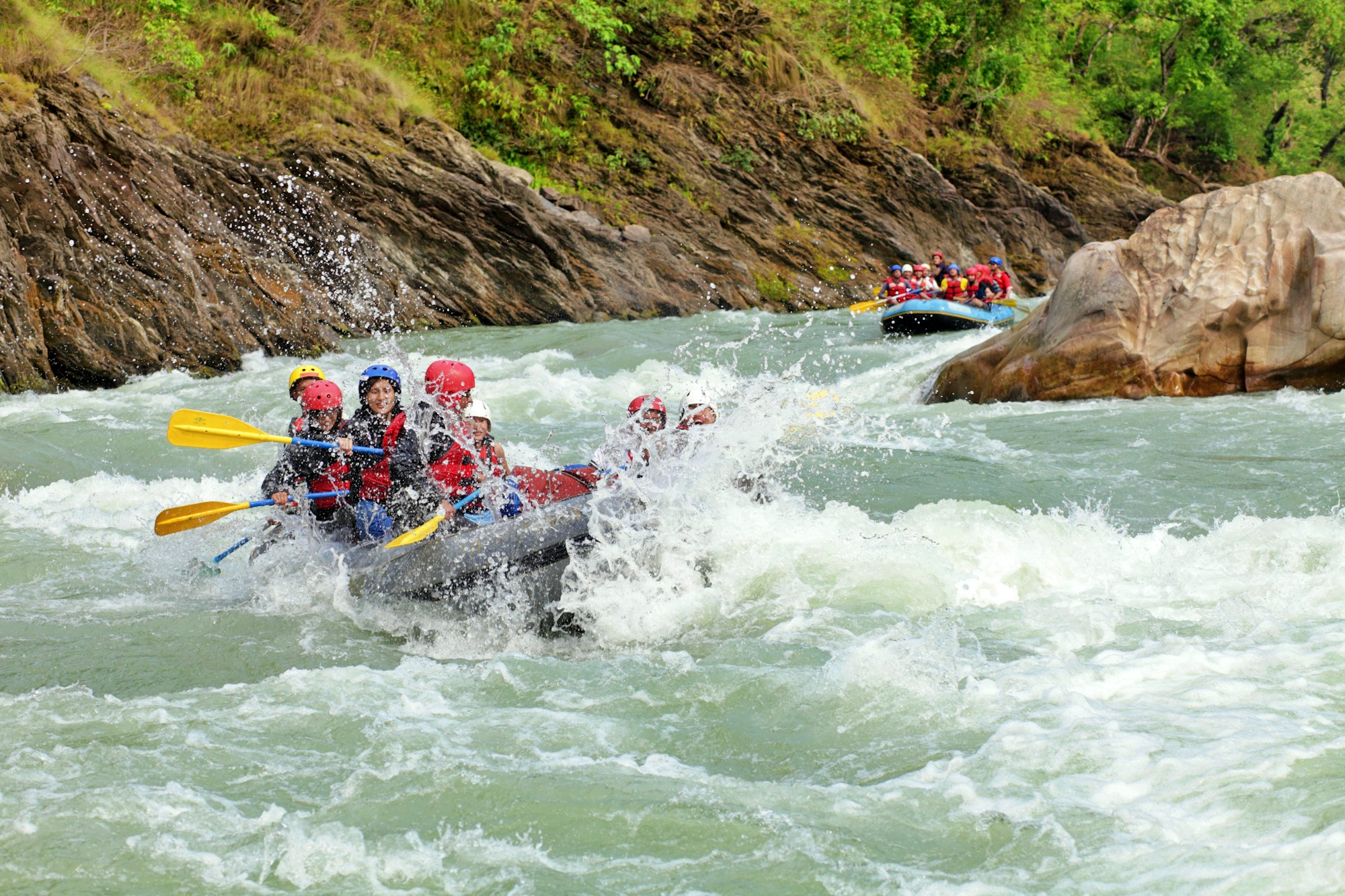
The water is grade 2 to 3 for most of the section we use, which means real rapids with names and splash, but nothing that requires prior experience. Children from about twelve and non swimmers are fine, since everyone is in a buoyancy aid and a helmet and the guide runs the safety briefing before anyone gets in a raft.
Trip highlights
- Grade 2 to 3 rapids, no previous rafting needed
- About 3 to 4 hours on the water with a licensed river guide
- A safety kayak alongside the raft
- Buffet lunch on the riverbank
- Works as a day trip, or as the middle of a Kathmandu to Pokhara transfer
Day by day
The itinerary
-
Day 1: Drive to the put in, raft the Trishuli, lunch on the bank 400 m 10 to 11 hours door to door hrs Lunch
Pick up from your hotel at about 7am and roughly three hours west on the Prithvi Highway to the put in near Charaudi or Baireni, depending on the water level.
The briefing
Thirty to forty minutes before anyone boards: how to hold the paddle, how to sit, the commands, what to do if you go in the water and how to get back into a raft. It is not optional and it is the part that matters.
On the water
Three to four hours downstream through named rapids, with flat stretches in between where you can swim if the guide says the section is safe for it. The gorge walls, the suspension footbridges and the villages on the terraces above are a good part of the day.
Water levels change the character of the river completely. September and early October run high and fast after the monsoon. By December the flow has dropped and the ride is gentler. Your guide will tell you honestly what the day will be like before you commit.
Lunch
A buffet on the riverbank at the take out, included.
Then either back to Kathmandu, arriving early evening, or onward to Pokhara if you are using the trip as a transfer. Both are included, so tell us which when you book.
What's included
Included
- Included: Private tourist vehicle from Kathmandu to the river, and on to either Kathmandu or Pokhara afterwards
- Included: Licensed river guide and a safety kayaker
- Included: Raft, paddle, helmet, buoyancy aid and wetsuit or splash jacket as the season needs
- Included: Safety briefing before launch
- Included: Buffet lunch on the riverbank
- Included: Dry bag for a change of clothes
- Included: All government taxes and administrative charges
Not included
- Not included: Breakfast and dinner
- Not included: Any beverages
- Not included: Tips for your river guide and driver
- Not included: Towel, swimwear and a change of clothes, which you bring
- Not included: Travel insurance. Please check that your policy covers whitewater rafting, because many standard policies do not
- Not included: Anything not listed under what is included
Know before you go
Suitability & requirements
You do not need to be a swimmer, but you do need to be comfortable going under water for a few seconds, because on grade 3 water that can happen. Tell us at the time of booking about any heart condition, recent surgery, pregnancy or shoulder injury and we will talk it through honestly rather than after you have paid.
Your team
Led by a licensed guide
Every route is led by a government-licensed guide from our team. Licences are on record with us before departure, and you'll meet your guide once your trip is confirmed.
Guide language(s): English, Nepali
Group-size pricing
Walk together, pay less
Every trip is private, so the guide, permits and transfers cost the same however many walk. Sharing them is why the per-person price falls: arithmetic, not a sale.
| Group size | per person | You save each |
|---|---|---|
| 1 trekker | $102.00 | base rate |
| 2 to 3 trekkers | $85.00 | $17.00 |
| 4 to 6 trekkers | $80.00 | $22.00 |
| 7 or more | $75.00 | $27.00 |
Per person, including permits, park fees and taxes. Nothing is added at checkout.
Weather
What to expect, month by month
- Autumn (Sep–Nov)The most reliable trekking season: clear air, stable weather and cold nights, right after the monsoon clears.
- Spring (Mar–May)Warmer than autumn, with rhododendron forests in flower and slightly hazier mountain views as the season goes on.
- Winter (Dec–Feb)Cold and quiet, with the clearest skies of the year at lower altitude. High passes and very high routes are best avoided.
Traveller reviews
What trekkers say
Why book with us
Every trail, one licensed team
You may also like