Chitwan Jungle Safari Tour
- Duration
- 4 days
- Max altitude
- 1,400 m
- Difficulty
-
Easy
Difficulty scale
- Easy Short walking days on good trails below about 3,000 m. Suitable for anyone in ordinary health, including families.
- Moderate 5 to 6 hours a day with some steep sections, reaching up to about 4,000 m. A reasonable level of fitness and a few weeks of preparation walking recommended.
- Strenuous 6 to 8 hours a day, high passes or altitudes above 5,000 m, and remote stretches. Good fitness, prior trekking experience and proper acclimatisation days are essential.
- Very strenuous Long days, multiple high passes or technical sections, sustained time above 5,000 m. For experienced, well-conditioned trekkers only.
- Best season
- Autumn (Sep–Nov) · Spring (Mar–May) · Winter (Dec–Feb)
- Group
- Private
- From
- $420.00
Overview
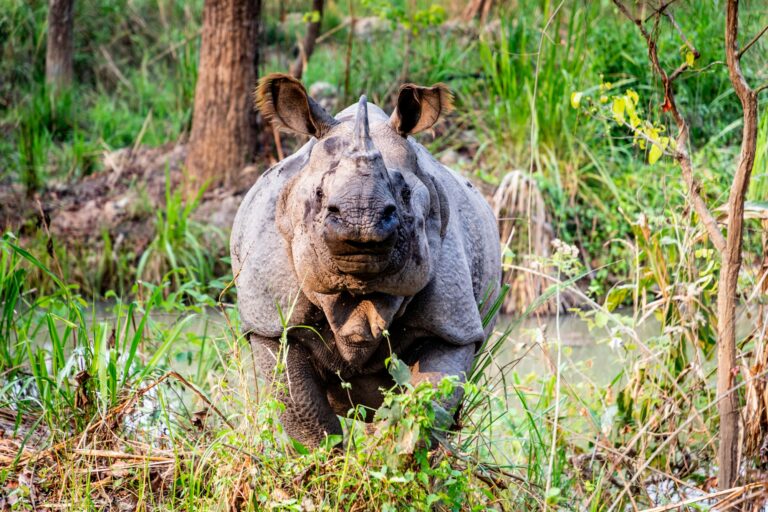
Chitwan was a royal hunting reserve, then a national park from 1973, and is now a UNESCO World Heritage site holding one of the healthiest populations of greater one horned rhino anywhere. It also has sloth bear, gaur, gharial and mugger crocodile, four species of deer and somewhere around six hundred bird species.
This is a proper wildlife itinerary rather than an afternoon add on: two full days in and around the park with naturalist guides, on wheels, on water and on foot.
Trip highlights
- Greater one horned rhino, which Chitwan has in real numbers
- A jeep safari deep into the park with a licensed naturalist
- Dugout canoe down the Rapti for gharial, mugger and waterbirds
- A guided walk on foot, which is how you see the small things
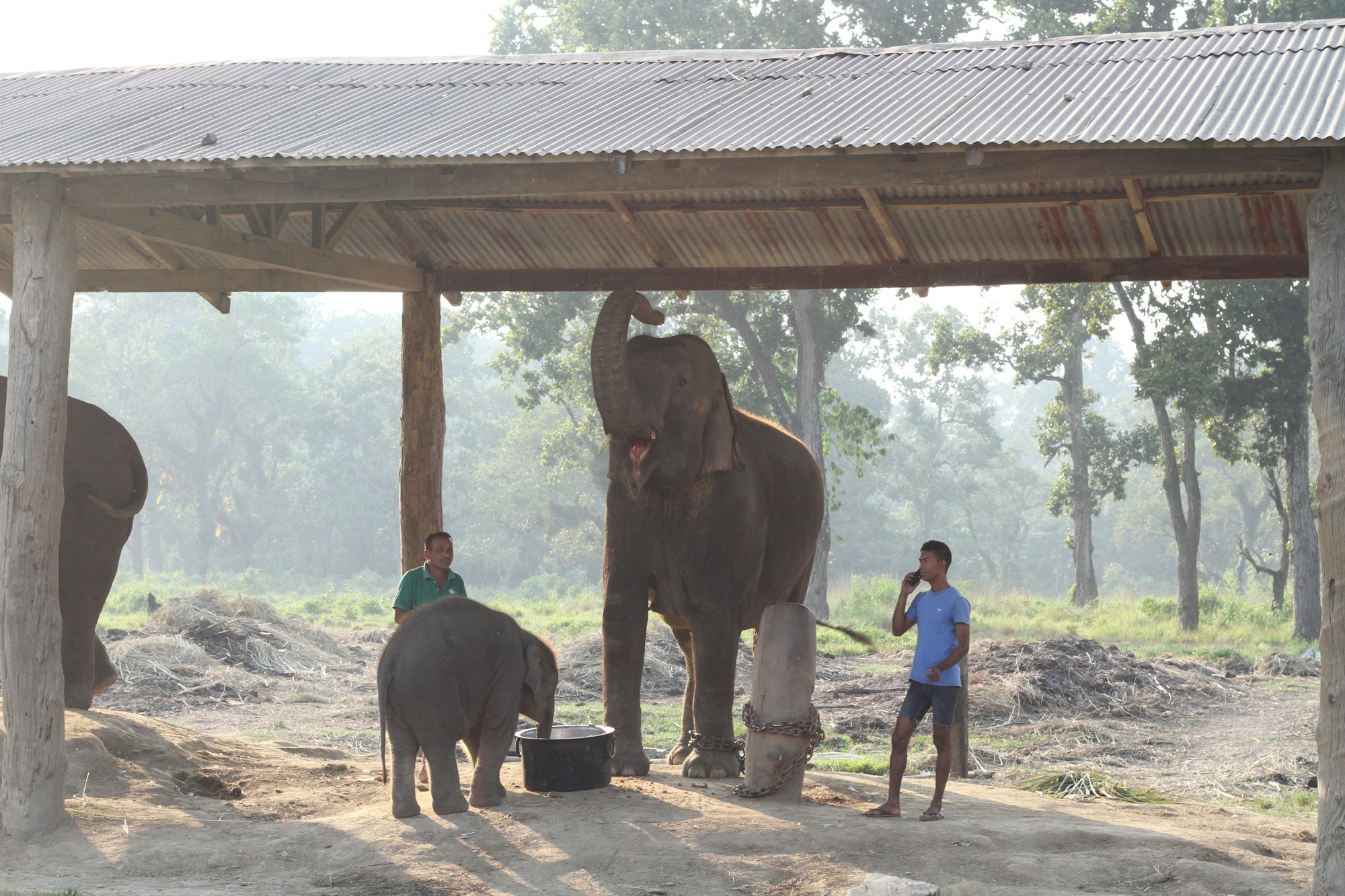
- The elephant breeding centre at Khorsor
- A Tharu village and an evening of Tharu stick dancing
Day by day
The itinerary
-
Day 1: Kathmandu to Sauraha 150 m 5 to 6 hours driving hrs Jungle lodge, all meals included Lunchanddinner
Picked up from your Kathmandu hotel after breakfast and driven south west, following the Trishuli for much of the way before dropping onto the Terai plain. Five to six hours depending on the highway.
Chitwan sits at about 150 m, so it will be warmer and considerably more humid than Kathmandu. Check in at your lodge in Sauraha, then once the heat comes off the day, a walk down to the Rapti river for sunset.
Your naturalist will brief you on the days ahead and on the rules for being on foot in a park that holds wild rhino. Those rules are not decoration.
-
Day 2: Full day in the park: jeep safari, canoe and a walk 150 m Full day hrs Jungle lodge, all meals included Breakfast/lunchanddinner
An early start, because dawn and dusk are when animals move.
A jeep safari into the park interior with a naturalist. Rhino are the reliable sighting. Also likely: spotted deer, sambar, barking deer, wild boar, grey langur and rhesus macaque, and if you are fortunate, gaur. There are around a hundred tigers in Chitwan and they are seen rarely. We will not pretend otherwise.
Back for lunch, then a dugout canoe down the Rapti in the afternoon. The canoe is silent, which is why it works: gharial and mugger crocodile on the banks, and kingfishers, storks, egrets and darters at close range.
The canoe ends with a guided walk back through the forest with two naturalists, one in front and one behind.
Dinner at the lodge, and an evening Tharu cultural programme in the village.
-
Day 3: Bird walk, the elephant breeding centre and a Tharu village 150 m 6 to 7 hours hrs Jungle lodge, all meals included Breakfast/lunchanddinner
Out before breakfast for a bird walk along the river and the community forest edge, which is the best two hours of the trip for anyone who cares about birds. In winter the migrants are in.
After breakfast, the elephant breeding centre at Khorsor, where the government runs a programme for the working elephants used in park patrols. You will see calves.
The afternoon is in a Tharu village with a local guide: the mud and dung houses, the fish traps, the granaries. The Tharu have lived in this malarial belt for centuries and carry a genetic resistance to malaria that outsiders do not.
Last evening at the lodge.
-
Day 4: Return to Kathmandu 1,400 m 5 to 6 hours driving hrs Not included on the last night Breakfast
Breakfast at the lodge, then the drive back up to Kathmandu, arriving mid to late afternoon.
If you would rather continue to Pokhara instead, it is about five hours west from Sauraha and we can send you that way at no extra charge on the guiding. Tell us when you book.
Altitude profile
The climb, day by day
Comfort tiers
Choose your level of comfort
| Amenity | Standardfrom $505.00 | Comfortfrom $595.90 | Luxuryfrom $732.25 |
|---|---|---|---|
| Kathmandu hotel | 3★ | 4★ | 5★ |
| Trail accommodation | Standard teahouse | Best lodge in each village | Premium lodge where the route has one |
| Porter support | Shared porter | Private porter, lighter load | Extra porter, carry almost nothing |
| Transfers | Shared | Private | Private, throughout |
What's included
Included
- Included: Private tourist vehicle from Kathmandu to Sauraha and back
- Included: Three nights at a jungle lodge in Sauraha
- Included: All meals at the lodge from lunch on day 1 to breakfast on day 4
- Included: Chitwan National Park entry permits for both full days
- Included: Jeep safari, dugout canoe trip and guided jungle walks with licensed naturalists
- Included: Elephant breeding centre entry
- Included: Tharu village walk with a local guide and an evening cultural programme
- Included: Government licensed English speaking guide throughout
- Included: All government taxes and administrative charges
Not included
- Not included: Accommodation in Kathmandu before or after the tour
- Not included: Any beverages, including bottled and boiled water
- Not included: Tips for your naturalist, guide, driver and lodge staff
- Not included: Nepal entry visa, obtainable on arrival at Tribhuvan International Airport
- Not included: Travel insurance
- Not included: Personal expenses and anything not listed under what is included
Know before you go
Suitability & requirements
The park restricts access during the monsoon, roughly late June to September, when the grass is head high and the rivers are up. October to March is the best window. March to May is very hot but sightings are good because animals come to water.
Your team
Led by a licensed guide
Every route is led by a government-licensed guide from our team. Licences are on record with us before departure, and you'll meet your guide once your trip is confirmed.
Guide language(s): English, Nepali
Group-size pricing
Walk together, pay less
Every trip is private, so the guide, permits and transfers cost the same however many walk. Sharing them is why the per-person price falls: arithmetic, not a sale.
| Group size | per person | You save each |
|---|---|---|
| 1 trekker | $505.00 | base rate |
| 2 to 3 trekkers | $420.00 | $85.00 |
| 4 to 6 trekkers | $395.00 | $110.00 |
| 7 or more | $370.00 | $135.00 |
Per person, including permits, park fees and taxes. Nothing is added at checkout.
Weather
What to expect, month by month
- Autumn (Sep–Nov)The most reliable trekking season: clear air, stable weather and cold nights, right after the monsoon clears.
- Spring (Mar–May)Warmer than autumn, with rhododendron forests in flower and slightly hazier mountain views as the season goes on.
- Winter (Dec–Feb)Cold and quiet, with the clearest skies of the year at lower altitude. High passes and very high routes are best avoided.
Traveller reviews
What trekkers say
Why book with us
Every trail, one licensed team
You may also like