Annapurna Circuit Trek
- Duration
- 16 days
- Max altitude
- 5,416 m
- Difficulty
-
Strenuous
Difficulty scale
- Easy Short walking days on good trails below about 3,000 m. Suitable for anyone in ordinary health, including families.
- Moderate 5 to 6 hours a day with some steep sections, reaching up to about 4,000 m. A reasonable level of fitness and a few weeks of preparation walking recommended.
- Strenuous 6 to 8 hours a day, high passes or altitudes above 5,000 m, and remote stretches. Good fitness, prior trekking experience and proper acclimatisation days are essential.
- Very strenuous Long days, multiple high passes or technical sections, sustained time above 5,000 m. For experienced, well-conditioned travellers only.
- Best season
- Autumn (Sep–Nov) · Spring (Mar–May)
- Group
- Private
- Per person, 2 travellers
- $1,150
Here is Annapurna Circuit Trek with Soulful Nepal Holidays: private, on the dates you choose, and priced as listed under what is included.
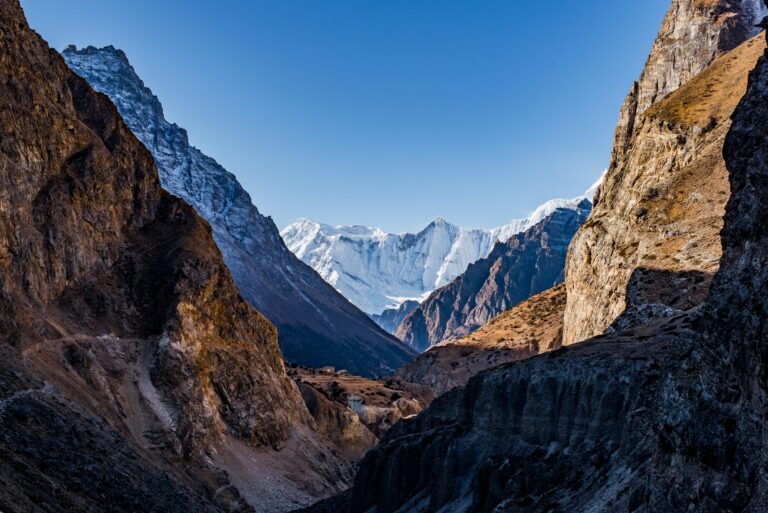
A full circuit around the Annapurna massif, from subtropical terraces to the high desert on the Tibetan side of the range, crossing Thorong La at 5,416 m. The landscape changes more on this trek than on any other in Nepal.
Every departure is private and led by a government-licensed Nepali guide, so the plan flexes to your party and to the mountain. Permits, park fees and local taxes are inside the price you see.
Read our full Annapurna Circuit guide for the day-by-day route, what Thorong La actually demands, and how it compares with Annapurna Base Camp.
Thinking about Annapurna Circuit Trek? The day-by-day itinerary, what is included and the price for your group size are all on this page, and you can message us about Annapurna Circuit Trek before you book.
Trip highlights
- Thorong La pass at 5,416 m
- Manang and the high Tibetan-influenced villages
- The Muktinath temple complex
- Rice terraces to high desert in one walk
The itinerary
-
Day 1: Arrive in Kathmandu (1,400 m) and transfer to your hotel 1,400 m Hotel
One of our team meets you at Tribhuvan International Airport and drives you to your hotel in a private vehicle. Later in the day we hold the pre-trip meeting, where you meet your guide and go through the route and your kit.
-
Day 2: Drive to Dharapani (1,860 m) by private vehicle 1,860 m 10-12 hrs Teahouse B/D
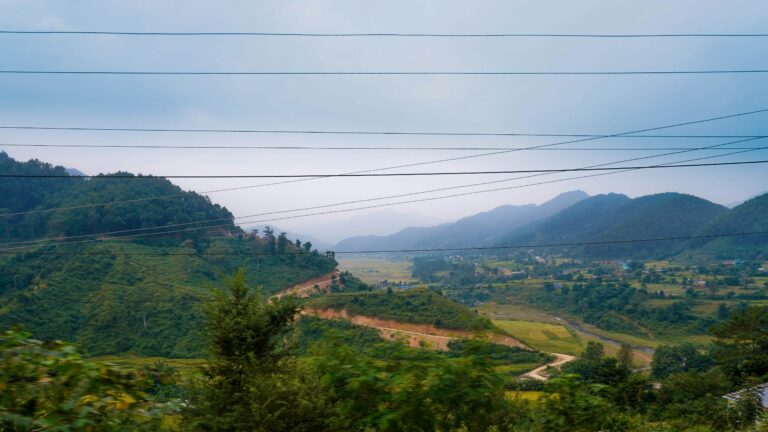
A long road day of ten to twelve hours, depending on traffic and the state of the road. The highway to Besisahar is paved; after that it is three to four hours on a rough dirt road up the Marsyangdi valley, so we use a vehicle suited to it, driven by an experienced driver. On a clear day there are views of Annapurna II, Lamjung Himal and Manaslu, with waterfalls and suspension bridges along the river.
-
Day 3: Trek to Chame (2,670 m) 2,670 m 5-6 hrs Teahouse B/L/D
A moderate first day on foot, climbing gradually up the Marsyangdi through forest, waterfalls and old villages, with glimpses of Annapurna II and Lamjung Himal. Chame is the headquarters of Manang district and has more facilities than anywhere you have passed so far.
-
Day 4: Trek to Upper Pisang (3,300 m) 3,300 m 6-7 hrs Teahouse B/L/D
Through dense forest along the Marsyangdi, past the first view of the Paungda Danda, a huge curved slab of rock rising from the river, and out into a wider, drier valley. Upper Pisang sits on the hillside with Annapurna II straight across to the south.
-
Day 5: Trek to Ngawal (3,660 m) by the upper trail 3,660 m 4-5 hrs Teahouse B/L/D
Sunrise on Annapurna II, then the upper trail, which runs about 400 m above the valley floor route and is worth the extra climb for the views of Annapurna II and III, Pisang Peak and the gorges below. Ngawal is an old stone village with prayer wheels and a small monastery.
-
Day 6: Trek to Manang (3,540 m) via Bhraka 3,540 m 3-4 hrs Teahouse B/L/D
A short day, mostly downhill, through Humde and on to Bhraka, with its old stone houses and a monastery above the village, then the last stretch to Manang, the largest village in the upper valley.
-
Day 7: Acclimatisation day in Manang (3,540 m) 3,540 m 3-4 hrs Teahouse B/L/D
A second night at the same altitude to prepare for the climb to Thorong La. We take a light hike to a monastery and to Gangapurna glacier lake below the peaks of Gangapurna and Annapurna III, then come back to rest in Manang.
-
Day 8: Trek to Yak Kharka (4,050 m) 4,050 m 4-5 hrs Teahouse (basic) B/L/D
A steady climb of about 500 m through Tenki Manang, leaving the Marsyangdi for the Jarsang Khola valley. The trees thin out, yaks graze the slopes, and the lodges get simpler.
-
Day 9: Trek to Thorong Phedi (4,525 m) 4,525 m 4-5 hrs Teahouse (basic) B/L/D
Up past Ledar, then down to a river crossing at about 4,310 m and a climb along a slope prone to rockfall, which we cross steadily without stopping, to Thorong Phedi at the foot of the pass. Lodges here are basic but decent. An early night.
-
Day 10: Cross Thorong La (5,416 m) to Muktinath (3,760 m) 5,416 m 8-9 hrs Teahouse B/L/D
A start around 4 am to reach the pass before the wind picks up. The climb is long and steady rather than technical, past High Camp to the chortens and prayer flags on Thorong La, with Thorong Peak, Chulu West and the Annapurnas around you and the Mustang side opening up ahead. Then a long, steep descent of about four hours on loose ground to Muktinath, sacred to both Hindus and Buddhists, where the Vishnu temple is surrounded by 108 water spouts and the Jwala Mai temple shelters a natural gas flame that has burned for centuries.
-
Day 11: Drive to Tatopani (1,190 m) via Jomsom by shared jeep or bus 1,190 m 6-7 hrs Teahouse B/L/D
Six to seven hours down the Kali Gandaki, one of the deepest gorges in the world, through Kagbeni, Jomsom and the apple orchards and whitewashed houses of Marpha, then past Kopchepani and into forest again with Dhaulagiri and the Annapurnas above. The vehicle is shared with other travellers; for groups of four or more we arrange a private one. Tatopani is known for its hot springs.
-
Day 12: Rest day at Tatopani (1,190 m) 1,190 m Teahouse B/L/D
A free day at Tatopani after the pass and the long ride down the Kali Gandaki. The natural hot springs by the river are the draw, and the rest of the day is yours to take slowly. You spend a second night here with all meals, which sets you up for tomorrow's hard climb of about 1,650 m to Ghorepani.
-
Day 13: Trek to Ghorepani (2,840 m) 2,840 m 7-8 hrs Teahouse B/L/D
A hard climb of about 1,650 m, through Magar villages such as Shikha and Chitre and then rhododendron and oak forest, joining the Poon Hill route at Ghorepani. Views open up to Annapurna South, Hiunchuli, Machhapuchhre and Dhaulagiri.
-
Day 14: Poon Hill (3,210 m) at sunrise, trek to Birethanti, drive to Pokhara 3,210 m 7-8 hrs Hotel B/L
A pre-dawn climb to Poon Hill for sunrise over Dhaulagiri, the Annapurnas and Machhapuchhre, then back to Ghorepani for breakfast. A long descent of five to six hours by stone steps through Ulleri and Tikhedhunga to Birethanti, then about two hours by private vehicle to Pokhara and a three-star hotel in Lakeside.
-
Day 15: Tourist bus back to Kathmandu (1,400 m) 1,400 m 7-9 hrs Hotel B/D
Seven to nine hours by tourist bus from Pokhara, so most of the day is spent on the road. You return to a hotel in Kathmandu with breakfast and dinner included. In the evening there is a farewell dinner with your guide and one of our office team.
-
Day 16: Departure 1,400 m B
Our airport representative takes you to Tribhuvan International Airport for your flight home.
The climb, day by day
Choose your level of comfort
| Amenity | Standard$1,150 | Comfort$1,357 | Luxury$1,667.50 |
|---|---|---|---|
| Kathmandu hotel | 3★ | 4★ | 5★ |
| Trail accommodation | Standard teahouse | Best lodge in each village | Premium lodge where the route has one |
| Porter support | Shared porter | Private porter, lighter load | Extra porter, carry almost nothing |
| Airport transfers | Private tourist vehicle | Private tourist vehicle | Private tourist vehicle |
| Road transfers on the trek | Shared | Private | Private, throughout |
Per person, for 2 travellers. The booking box shows the exact price for your group size.
What's included
Included
- Included: Twin-sharing/double accommodation in a 3-star hotel in Kathmandu for 2 nights and Pokhara for 1 night, including breakfast
- Included: Twin-sharing guesthouse accommodation for 12 nights on the trek; at the highest stops a dormitory room is occasionally the only option
- Included: All standard meals during the trek (12 breakfasts, 12 lunches and 12 dinners), each with tea or coffee
- Included: Fresh seasonal fruit each day after dinner during the trek
- Included: A farewell dinner on the last night in Nepal
- Included: Purified drinking water during the trek, using a water filter or purification tablets
- Included: All international and domestic airport transfers by private tourist vehicle
- Included: Private tourist vehicle from Kathmandu to Dharapani, and from Birethanti to Pokhara
- Included: Shared local jeep or bus from Muktinath to Tatopani
- Included: Tourist bus from Pokhara to Kathmandu
- Included: Annapurna Conservation Area Permit (ACAP)
- Included: TIMS (Travellers' Information Management System) card
- Included: An experienced, English-speaking trekking guide, fully licensed and trained for high-altitude trekking
- Included: One porter for every two travellers, carrying up to 25 kg between you
- Included: Proper wages, insurance, equipment, food and accommodation for all crew
- Included: A comprehensive medical kit carried by the guide, including an oximeter to monitor oxygen levels throughout the trek
- Included: Down jacket (rated to -15 Celsius) and sleeping bag (rated to -20 Celsius) on loan, plus a 70-litre trekking duffel, Annapurna trekking map, cap and company T-shirt
- Included: Trip completion certificate
- Included: All government taxes, permits and service charges
Not included
- Not included: Meals (lunch and dinner) in Kathmandu and Pokhara
- Not included: International flight fare and airport departure tax
- Not included: Nepal Entry Visa (Visa can be acquired easily after your arrival at Tribhuvan International Airport in Kathmandu with a fee of USD 30 for 15 days visa, USD 50 for 30 days visa and USD 125 for 90 days visa)
- Not included: Travel insurance along with high-altitude emergency evacuation coverage
- Not included: Any beverages including bottled and boiled water
- Not included: Tips to trekking staff and driver
- Not included: Personal trekking gear and equipment
- Not included: Any expenses other than the Price Include section
Getting there & back
One of our team meets you at Tribhuvan International Airport and drives you to your hotel. Later that day we hold the pre-trip meeting, where you meet your guide and go through the route and your kit.
Day two is a long road day of ten to twelve hours by private vehicle to Dharapani: paved highway as far as Besisahar, then three to four hours of rough dirt road up the Marsyangdi valley. After the pass, a shared local jeep or bus takes you from Muktinath down to Tatopani. At the end, a private vehicle brings you from Birethanti to Pokhara and the tourist bus takes you back to Kathmandu.
Led by a licensed guide
Every route is led by a government-licensed guide from our team. Licences are on record with us before departure, and you'll meet your guide once your trip is confirmed.
Guide language(s): English, Nepali
Walk together, pay less
Every trip is private, so the guide, permits and transfers cost the same however many walk. Sharing them is why the per-person price falls: arithmetic, not a sale.
| Group size | per person | You save each |
|---|---|---|
| 1 traveller | $1,380 | base rate |
| 2 to 3 travellers | $1,150 | $230 |
| 4 to 6 travellers | $1,080 | $300 |
| 7 or more | $1,010 | $370 |
Per person, including permits, park fees and taxes. Nothing is added at checkout.
What to expect, month by month
- Autumn (Sep–Nov)The most reliable trekking season: clear air, stable weather and cold nights, right after the monsoon clears.
- Spring (Mar–May)Warmer than autumn, with rhododendron forests in flower and slightly hazier mountain views as the season goes on.
What travellers say
FAQ & policies
Do I need previous trekking experience?
It helps. The trek is graded strenuous and crosses Thorong La at 5,416 m, so you should be comfortable walking most of the day on consecutive days. A couple of months of regular hill walking beforehand makes a real difference.
How do you prepare for Thorong La?
The route climbs gradually up the Marsyangdi valley and includes a full acclimatisation day in Manang before Yak Kharka and Thorong Phedi. You cross the pass on day ten and drop down to Muktinath at 3,760 m the same day.
What happens if I get altitude sickness?
Your guide carries a medical kit with an oximeter and checks everyone through the trek. Mild symptoms mean rest or descent. Serious symptoms mean going down at once, which is why your travel insurance must cover high-altitude emergency evacuation.
Who carries my luggage?
One porter for every two travellers, carrying up to 25 kg between you. You walk with a day pack.
When is the best time to go?
Autumn, September to November, and spring, March to May. These are the months we run this trek.
How does booking confirmation work?
Instantly. Your booking is confirmed as soon as your payment or deposit goes through, and the confirmation email follows straight away. We then collect what we need for your permits and introduce your licensed guide before you travel.
Can I pay a deposit and settle the balance later?
Yes. Choose the deposit option to secure your dates, and we will send a secure payment link for the balance before departure, or you can settle by bank transfer.
What is the cancellation policy?
If you cancel before departure, we refund what you paid, minus the payment provider's transaction fee, which they do not return to us, and the cost of any permits, flights or bookings already issued for you. Full terms are in our cancellation policy.