Upper Dolpo Trek
- Duration
- 25 days
- Max altitude
- 5,306 m
- Difficulty
-
Very strenuous
Difficulty scale
- Easy Short walking days on good trails below about 3,000 m. Suitable for anyone in ordinary health, including families.
- Moderate 5 to 6 hours a day with some steep sections, reaching up to about 4,000 m. A reasonable level of fitness and a few weeks of preparation walking recommended.
- Strenuous 6 to 8 hours a day, high passes or altitudes above 5,000 m, and remote stretches. Good fitness, prior trekking experience and proper acclimatisation days are essential.
- Very strenuous Long days, multiple high passes or technical sections, sustained time above 5,000 m. For experienced, well-conditioned trekkers only.
- Best season
- Autumn (Sep–Nov) · Spring (Mar–May)
- Group
- Private
- From
- $1,560.00
Overview
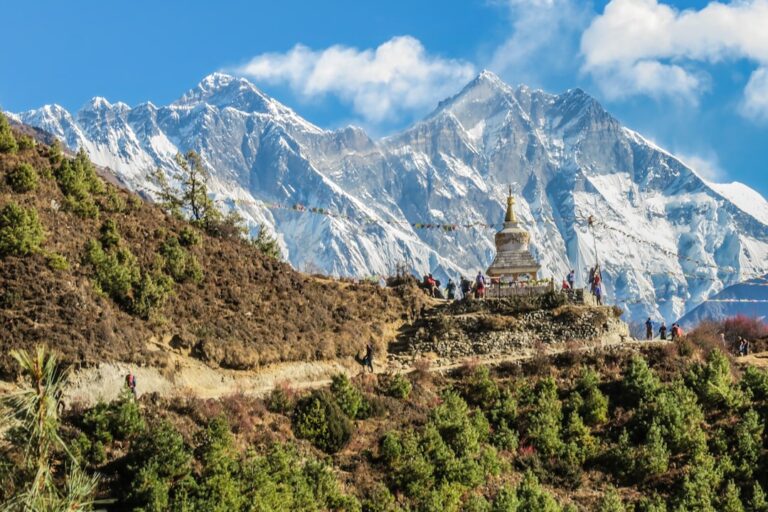
Trans-Himalayan Nepal at its most remote. Shey Phoksundo, the deepest lake in the country, ancient Bon monasteries, several passes above 5,000 m and full camping support because there is nothing else out there.
Every departure is private and led by a government-licensed Nepali guide, so the plan flexes to your party and to the mountain. Permits, park fees and local taxes are inside the price you see.
Trip highlights
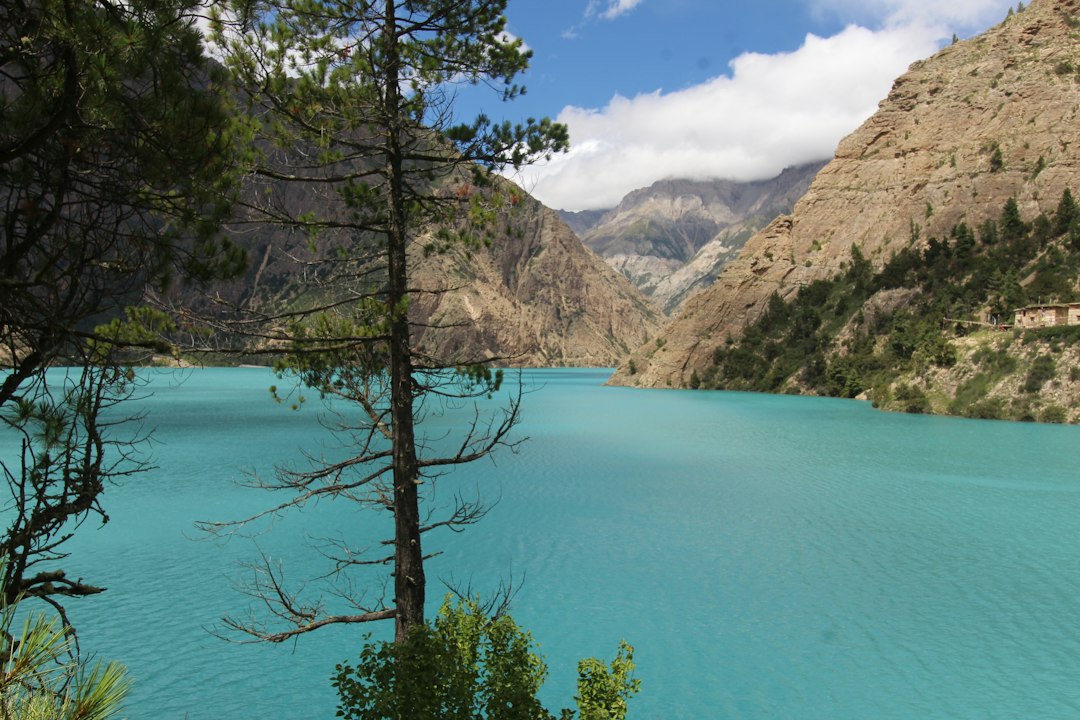
- Shey Phoksundo, the deepest lake in Nepal
- Bon monasteries older than Buddhism here
- Several passes above 5,000 m
- Full camping expedition, no lodges
Day by day
The itinerary
-
Day 1: Arrival at the Tribhuvan International Airport in Kathmandu (1,400 m/4,593 ft) 1,400 m Hotel
Upon your arrival at Tribhuvan International Airport, you will be greeted by our representative and transferred to your hotel. After check-in, you can rest or explore the lively streets of Thamel, the vibrant tourist district.
In the afternoon or evening, you’ll have a pre-trip briefing about the Upper Dolpo Trek, ensuring you’re well-prepared for the journey ahead.
-
Day 2: Fly to Nepalgunj from Kathmandu – 1-hour flight Hotel
Today, you’ll take a scenic flight from Kathmandu to Nepalgunj, located in the western Terai plains of Nepal, close to the Indian border. As you descend from the hilly Kathmandu valley, you’ll notice a shift in climate and scenery.
Nepalgunj is a bustling trade hub and has a distinctly different feel from the Himalayan region. In the evening, you can take a leisurely walk around the town or relax at your hotel, preparing for the next day’s flight into the
remote Dolpo region. -
Day 3: Fly to to Juphal (2,400 m/7,874 ft) – 35 minutes. Trek to Dunai (2,150 m/7,054 ft) – 3 to 4 hours 2,400 m 3-4 hrs Camping
This morning, you’ll board a short yet thrilling flight to Juphal, the starting point of your trek into Upper Dolpo. As the plane glides over the rugged terrain, you’ll be welcomed by stunning views of the Dhaulagiri and other
Himalayan peaks.After landing in Juphal, you’ll begin your trek toward Dunai, the administrative center of Dolpo. The trail descends through terraced fields and passes through small villages, offering glimpses into the rural lifestyle.
Dunai, situated by the Bheri River, is a small town with teahouses and a peaceful atmosphere. -
Day 4: Spare day in Nepalgunj (150 m/492 ft) Hotel
Today is a spare day in Nepalgunj to account for any potential flight delays to Juphal. If your flight is on time, you can use this day to acclimatize during a day of your trek and continue as per itinearary.
If you spend a day at Nepalgunj, consider exploring local attractions or sampling some regional cuisine at a nearby restaurant. Visit the Bardia National Park or take a leisurely stroll along the banks of the Karnali River.
This extra day provides a chance to acclimatize and recharge before heading into the more remote areas. -
Day 5: Trek to Ankhe (2,660 m/8,727 ft) – 6 to 7 hours 2,660 m 6-7 hrs Camping
Leaving Dunai, the trail climbs steadily along a rugged path, winding through a forested area that is rich in biodiversity. The trail takes you along the Bheri River’s banks, crossing suspension bridges and passing
small settlements.Ankhe marks the entry into Shey Phoksundo National Park, a protected area known for its diverse wildlife, including blue sheep and the elusive snow leopard. The dense forests of pine and oak provide cool shade as
you ascend, offering spectacular views of the surrounding hills. -
Day 6: Trek to Renje (3,104 m/10,184 ft) – 6 to 7 hours 3,104 m 6-7 hrs Camping
Today’s trek involves both ascents and descents as you make your way along a challenging yet scenic path. The trail passes through lush green forests, small villages, and terraced fields.
Renje is a tiny settlement surrounded by towering cliffs and dense forests, giving it a secluded and remote feel. The journey is steep in places, but the breathtaking scenery makes the effort worthwhile.
-
Day 7: Trek to Phoksundo Lake (3,600 m/11,811 ft) – 6 to 7 hours 3,600 m 6-7 hrs Camping
Today’s trek takes you to one of the most iconic destinations in Upper Dolpo, the pristine Phoksundo Lake. The trail climbs steeply, providing stunning panoramic views of the surrounding mountains and valleys.
You’ll pass through the village of Ringmo, a traditional Bonpo settlement, where you can see ancient chortens and mani walls. The final ascent to Phoksundo Lake is steep, but the sight of the turquoise waters
shimmering against the backdrop of the snow-capped mountains is unforgettable.This sacred lake holds great significance for both Buddhists and followers of the Bon religion.
-
Day 8: Trek to Phoksundo Khola (3,507 m/11,505 ft) – 5 to 6 hours 3,507 m 5-6 hrs Camping
After enjoying the tranquility of Phoksundo Lake, you’ll continue your trek along its western shore, entering a narrow gorge. The trail follows the Phoksundo Khola (river), leading you through pristine wilderness
where you’ll encounter cascading waterfalls and sheer rock walls.As you walk deeper into the Dolpo region, the landscape becomes more barren and rugged, evoking a sense of isolation and wonder. This remote trail is less traveled, allowing you to fully appreciate
the untouched beauty of Dolpo. -
Day 9: Trek to Phoksundo Bhanjyang (4,402 m/14,442 ft) – 6 to 7 hours 4,402 m 6-7 hrs Camping
Today’s trek takes you on a steep ascent toward Phoksundo Bhanjyang, also known as the Kang La Base Camp. The trail is challenging, with numerous switchbacks as you gain altitude.
The landscape transitions to high alpine terrain, with rocky outcrops, scattered shrubs, and occasional views of snow-capped peaks.
As you approach the base of Kang La Pass, you’ll feel the altitude and the thinning air, but the incredible views of the surrounding mountains will keep you motivated.
-
Day 10: Cross the Kang La pass (5,306 m/17,405 ft) and trek to Shey Gompa (4,126 m/13,537 ft) – 6 to 7 hours 5,306 m 6-7 hrs Camping
Today is one of the most challenging yet rewarding days of the trek. You’ll cross the Kang La Pass, one of the highest passes in the region, which offers breathtaking views of the Dolpo region’s stark, barren landscape.
The ascent is steep and the air thin, but once you reach the top, you’ll be rewarded with unparalleled views of the surrounding valleys and peaks. From the pass, you’ll descend toward Shey Gompa, one of the most
important pilgrimage sites in Dolpo.This ancient monastery, known as the Crystal Mountain Monastery, is a sacred place for both Buddhists and Bonpo followers.
-
Day 11: Rest and exploration day at Shey Gompa Camping
Today is a well-deserved rest day at Shey Gompa. This day allows you to explore the surroundings and learn about the spiritual significance of this sacred site. Shey Gompa is renowned for its religious and cultural
heritage, and you can take this opportunity to visit the monastery, meditate, or simply relax.The Crystal Mountain, towering above Shey, is said to be a holy mountain where pilgrims walk around the base in a sacred kora. You’ll also have a chance to observe the lifestyle of the local people who live in
this remote and mystical part of Nepal. -
Day 12: Cross the Saldang La pass (4,785 m/15,698 ft) and trek to Namgung Gonpa (4,400 m/14,436 ft) – 6 to 7 hours 4,785 m 6-7 hrs Camping
Leaving Shey Gompa, you’ll embark on another challenging day as you trek toward Namgung Gonpa, crossing the Saldang La Pass along the way. The trail ascends steeply to the pass, offering awe-inspiring
views of the vast Dolpo region. After reaching the top of the pass, you’ll descend toward the beautiful settlement of Namgung.This village, perched on a hill, is home to Namgung Monastery, a red stone structure built into the cliffs. The monastery plays a crucial role in the spiritual lives of the local residents. You can explore the area and
interact with the villagers, gaining insight into their way of life in this remote corner of Nepal.The subsequent descent towards the north is long and tiring, but you finally come upon the welcome sight of pastures of grazing yaks and sheep and nomadic tents made from yak hair. This signals your
approach to Namgung Gonpa. Like Shey, the Namgung monastery is of the Karma-pa sect.The monastery, a red stone structure, is built against the backdrop of a cliff on the north wall of a gorge. The red and white colors of the Gonpa and its Stupas are the only color in this stark landscape. The village
itself consists of only six stone houses and has terraced fields on both sides of the tributary, which flows down to the Nam Khong valley.The economy of the region is based on agriculture, animal husbandry and trading. In Dolpo, only one crop a year can be grown and this is mainly barley. In some village buckwheat, oilseed, potato and radish
are also cultivated. Recently the main cliff temple collapsed and the villagers have now built a beautiful new monastery in the village itself. -
Day 13: Trek to Saldang (3,903 m/12,808 ft) – 4 to 5 hours 3,903 m 4-5 hrs Camping
Today’s trek takes you to Saldang, one of the largest and most prosperous villages in the Dolpo region. The trail descends and follows the dusty, barren landscape of the high plateau, where the vastness of the
region becomes truly apparent.As you approach Saldang, the terrain gradually becomes more hospitable, with terraced fields and cultivated lands indicating the village’s agricultural practices.
Saldang is situated along an ancient trade route between Tibet and Nepal and is an important hub for the local economy. The people of Saldang live in a harsh environment, yet their culture and traditions
remain rich and vibrant. -
Day 14: Trek to Sibu (3,942 m/12,933 ft) – 5 to 6 hours 3,942 m 5-6 hrs Camping
Leaving Saldang, the trail gradually descends toward the riverbed, taking you through a picturesque landscape of terraced fields, stupas, chortens, and mani stone walls. You’ll pass Namdo, another prosperous
village with around 60 houses and nearly 400 inhabitants.The Namdo Monastery, located near the river, is a serene spot for reflection, while another small monastery sits on a high cliff above the village. After exploring Namdo, you’ll continue trekking along the river
to reach Sibu, a small settlement located right on the riverbank, where you’ll set up camp for the night. -
Day 15: Trek to the foot of the Jeng La (4,369 m/14,334 ft) – 5 to 6 hours 4,369 m 5-6 hrs Camping
Following the river valley, today’s trek begins with an easy trail, meandering through meadows and offering picturesque views of the surrounding hills. After two hours, you’ll need to cross a stream, and soon after,
the trail turns sharply into a side valley where the ascent becomes more challenging.The final part of the trek leads to a peaceful meadow scattered with yak and other livestock, marking the base of the Jeng La Pass. The climb prepares you for the steep ascent to the pass tomorrow, but for now,
you can relax in the tranquil atmosphere of the high alpine environment. -
Day 16: Cross the Jeng La pass (4,845 m/15,895 ft) and trek to Tokyu Gaon (4,240 m/13,911 ft) – 6 to 7 hours 4,845 m 6-7 hrs Camping
Today, you’ll face another challenging pass, the Jeng La. The climb is steep and exhausting, but the views from the top are truly spectacular. As you cross the pass, you’ll be rewarded with sweeping panoramas
of the Dhaulagiri and Kanjiroba mountain ranges.The descent takes you into the Tarap Valley, one of the highest human settlements in the world. Tokyu Gaon is a large village in the Tarap region, home to several monasteries and a vibrant community of
Tibetan Buddhists. You’ll notice the distinct Tibetan influence in the architecture, prayer flags, and mani walls that adorn the village. -
Day 17: Trek to Dho Tarap (4,090 m/13,419 ft) – 4 to 5 hours 4,090 m 4-5 hrs Camping
Today’s trek takes you on a gentle path through the wide Tarap Valley, a region of immense natural beauty and cultural richness. The trail is easier compared to previous days, allowing you to fully
enjoy the landscapes of rolling hills, open pastures, and traditional villages.Dho Tarap is a culturally rich village where you’ll find a mix of Bonpo and Buddhist communities living in harmony. The stone houses, prayer flags, and ancient monasteries give Dho Tarap a timeless,
spiritual feel. You’ll have the opportunity to visit the local gompas and interact with the warm and hospitable Dolpo-pa people. -
Day 18: Trek to Serkam (3,630 m/11,909 ft) – 6 to 7 hours 3,630 m 6-7 hrs Camping
The trail today gradually descends from the high plateau of Dho Tarap, following the Tarap Khola. The path takes you through a mix of lush forests and arid landscapes, showcasing Dolpo’s incredible ecological diversity.
You’ll walk past terraced fields, small villages, and monasteries, with occasional glimpses of blue sheep grazing on the hillsides. As you approach Serkam, the valley becomes narrower, and the surrounding cliffs loom
high above.Serkam is a small settlement where you’ll camp for the night, surrounded by the rugged beauty of the Dolpo region.
-
Day 19: Trek to Khani Gaon (2,550 m/8,366 ft) – 6 to 7 hours 2,550 m 6-7 hrs Camping
Today’s trail continues descending through the Tarap Gorge, one of the deepest and most dramatic gorges in Nepal. The path is narrow in places and requires careful footing, but the stunning scenery makes it worth the effort.
You’ll walk through lush forests of pine and rhododendron, with the sound of the rushing river echoing in the gorge below. As you descend, the air becomes warmer, and the landscape transitions from
high alpine to more temperate zones. Khani Gaon is a peaceful village nestled in the hills, where you’ll set up camp for the night. -
Day 20: Trek to Tarakot (2,281 m/7,484 ft) – 4 to 5 hours 2,281 m 4-5 hrs Camping
Today’s trek is a relatively easy descent to Tarakot, a historical town once used as a fortress to guard the trade route to Tibet. The trail follows the winding river, passing through small villages and terraced fields.
Tarakot is situated on a hill overlooking the river, and you can explore the ancient ruins of the fortress, which date back to the early Tibetan period. The town is also home to a Bonpo monastery, which you can
visit to learn more about the region’s spiritual traditions. -
Day 21: Trek to Dunai (2,052 m/6,732 ft) – 5 to 6 hours 2,052 m 5-6 hrs Camping
Today’s trek takes you back to Dunai, the administrative center of the Dolpo region. The trail descends further, passing through beautiful landscapes of forests, rivers, and traditional villages.
As you approach Dunai, you’ll feel a sense of accomplishment as you complete the loop of your Upper Dolpo adventure. In Dunai, you can enjoy the comforts of a larger town, with access to basic amenities and teahouses.
-
Day 22: Trek to Juphal (2,404 m/7,887 ft) – 3 to 4 hours 2,404 m 3-4 hrs Camping
Your final trekking day takes you from Dunai to Juphal, retracing the path through terraced fields and small villages. The trail is relatively easy, and you’ll have time to reflect on the incredible journey
you’ve undertaken in one of the most remote and culturally rich regions of Nepal. In Juphal, you’ll prepare for tomorrow’s flight back to Kathmandu. -
Day 23: Fly to Kathmandu via Nepalgunj – Total 1-hour and 35-minute flight Hotel
In the morning, you’ll board a short flight from Juphal to Nepalgunj, and from there, catch another flight back to Kathmandu. Upon arrival in Kathmandu, you’ll be transferred to your hotel where you can rest or explore the city.
This is a great time to do some last-minute shopping in Thamel. In the evening, you will have a farewell dinner with your guide.
-
Day 24: Spare day in Juphal (2,400 m/7,874 ft) in case of flight delay 2,400 m Camping
Today is a buffer day in Juphal in case of any flight delays. However, if the flight is on time, you can proceed to fly from Juphal to Nepalgunj and then onward to Kathmandu on the same day.
If you end up staying in Juphal, use this day to rest and explore the local area, or simply relax before concluding your Upper Dolpo journey.
-
Day 25: Transfer to the international airport for your final departure
After breakfast, our representative will transfer you to Tribhuvan International Airport for your final departure, bidding you farewell as you embark on your onward journey with memories of the majestic Upper Dolpo trek.
Altitude profile
The climb, day by day
Comfort tiers
Choose your level of comfort
| Amenity | Standardfrom $1,870.00 | Comfortfrom $2,206.60 | Luxuryfrom $2,711.50 |
|---|---|---|---|
| Kathmandu hotel | 3★ | 4★ | 5★ |
| Trail accommodation | Standard teahouse | Best lodge in each village | Premium lodge where the route has one |
| Porter support | Shared porter | Private porter, lighter load | Extra porter, carry almost nothing |
| Transfers | Shared | Private | Private, throughout |
What's included
Included
- Included: Twin-sharing/double accommodation in a 3-star hotel for in Kathmandu for 2 nights and a 2 to 3-star hotel in Nepalgunj for 2 nights including breakfast (Private room accommodation can be organized at an extra cost)
- Included: Tented camp accommodation and equipment during the camping trek for 17 nights. (We will provide two-man tents, dining tents, kitchen gear, dining table, chairs, toilet tents, and shower tents).
- Included: Twin-sharing/double accommodation in a teahouse for 3 nights (However, meals will be provided in the camp. If the few available teahouses are full, you will be staying at tented camp)
- Included: All your standard meals during the trek (Breakfast, Lunch, and Dinner) including seasonal fruits
- Included: A farewell dinner on the last night in Nepal
- Included: Purified drinking water during the trek using water filter or water purification tablets.
- Included: All (international and domestic) airport transfers on a tourist vehicle
- Included: Flight fare from Kathmandu – Nepalgunj – Juphal – Nepalgunj – Kathmandu including airport departure taxes.
- Included: Special Trekking Permit US$ 70 per person per day and all local conservation fees.
- Included: Experienced, wilderness first-aid trained, government licensed, English speaking, and locally recruited trekking guide (2 guides for group size more than 7 people).
- Included: Porters during the trek for carrying luggage (1 porter for every 2 clients)
- Included: Wages, accommodation, meals, gear, insurance, and medications for all staff
- Included: 1 duffel/kit bag, trekking map, sun hat, Buff (Neck Gaiter)
- Included: A comprehensive first aid kit, including an Oximeter to check pulse and oxygen levels daily in the mountains
- Included: Trip completion certificate
- Included: All administrative expenses and government taxes
Not included
- Not included: Meals not specified in the 'Meal Inclusions' in the itinerary'
- Not included: Travel insurance – Compulsory
- Not included: International airfare
- Not included: Nepal entry visa
- Not included: All cold drinks such as: alcoholic beverages, mineral water, Coke, Fanta, juice, etc.
- Not included: Personal shopping and laundry, phone, internet bill etc.
- Not included: Personal trekking equipment
- Not included: Tips for trekking crews
Your team
Led by a licensed guide
Every route is led by a government-licensed guide from our team. Licences are on record with us before departure, and you'll meet your guide once your trip is confirmed.
Guide language(s): English, Nepali
Group-size pricing
Walk together, pay less
Every trip is private, so the guide, permits and transfers cost the same however many walk. Sharing them is why the per-person price falls: arithmetic, not a sale.
| Group size | per person | You save each |
|---|---|---|
| 1 trekker | $1,870.00 | base rate |
| 2 to 3 trekkers | $1,560.00 | $310.00 |
| 4 to 6 trekkers | $1,465.00 | $405.00 |
| 7 or more | $1,375.00 | $495.00 |
Per person, including permits, park fees and taxes. Nothing is added at checkout.
Weather
What to expect, month by month
- Autumn (Sep–Nov)The most reliable trekking season: clear air, stable weather and cold nights, right after the monsoon clears.
- Spring (Mar–May)Warmer than autumn, with rhododendron forests in flower and slightly hazier mountain views as the season goes on.
Traveller reviews
What trekkers say
Why book with us
Every trail, one licensed team
You may also like