
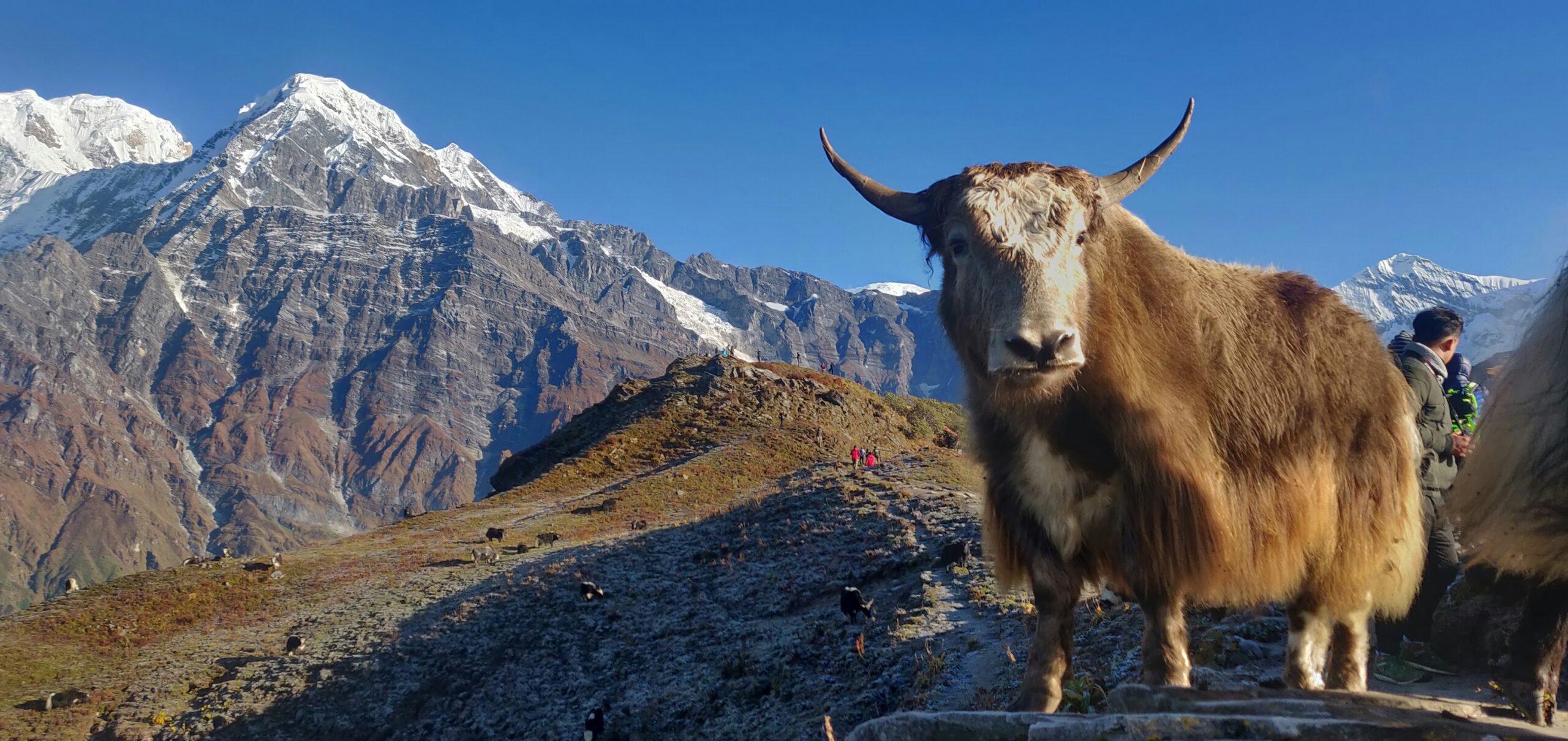
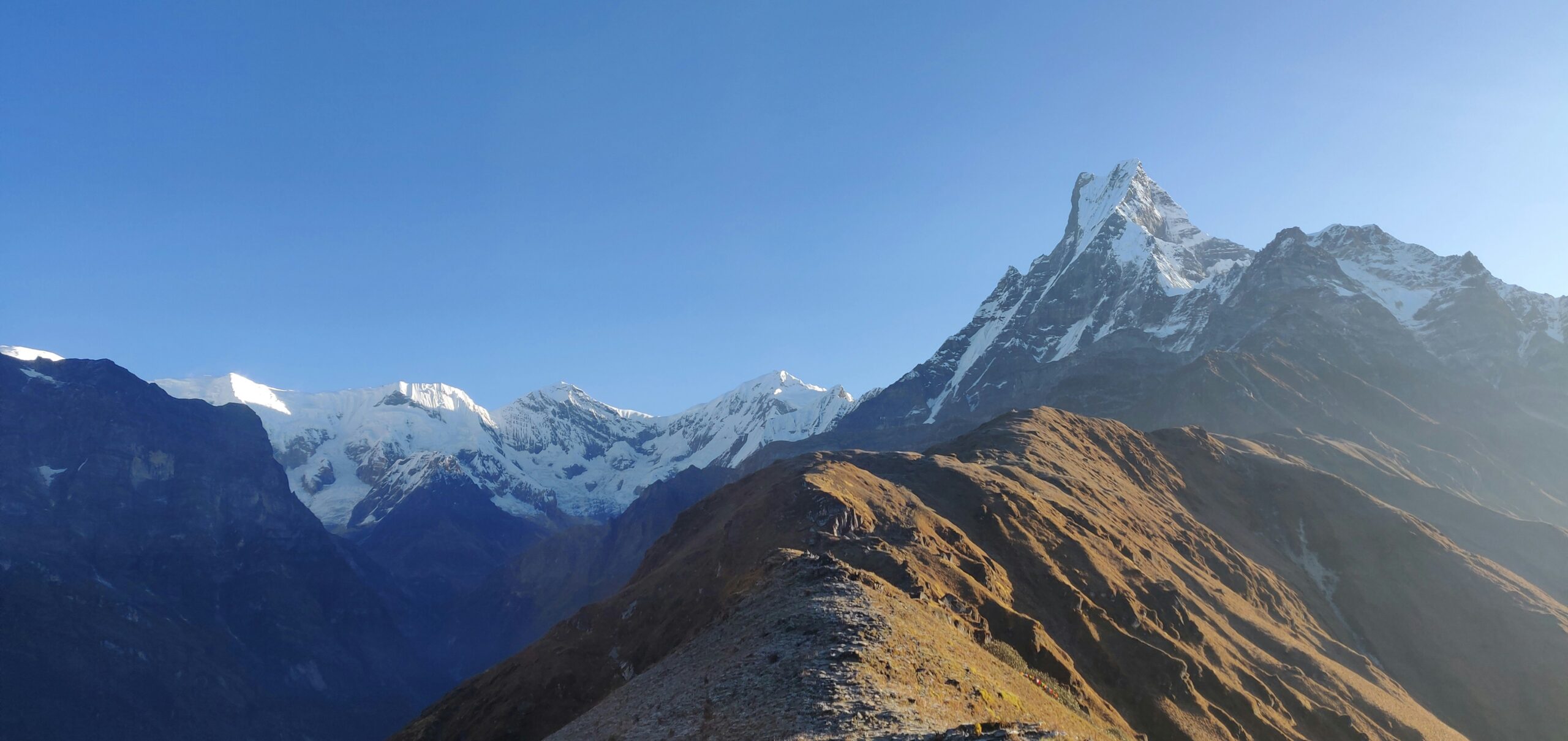
For a long time, Mardi Himal was the quiet alternative trekkers found almost by accident. These days more people know about it, and once you see the view from its ridge, it’s obvious why. The Mardi Himal Trek puts you on a narrow, grassy ridgeline with Machhapuchhre, the Fishtail peak, rising directly in front of you, closer than it appears from almost anywhere else.
In this article
Why it’s worth doing
It starts a short drive from Pokhara rather than needing a flight, needs only five nights on the trail, and climbs to a viewpoint at 4,250 metres below Mardi Himal without the multi-week commitment of the bigger Annapurna routes. The trail itself runs mostly through rhododendron forest below the treeline before opening onto exposed ridge above it, so the scenery shifts dramatically in a single day’s walk. It only opened as a lodge route in recent years, and it still sees fewer trekkers than Poon Hill or Annapurna Base Camp, despite being just as photogenic.
The route, day by day
- Day 1: Arrive in Kathmandu (1,400 m).
- Day 2: Tourist bus to Pokhara (820 m), 7 to 8 hours.
- Day 3: Drive to Kande and walk up to Australian Camp (2,060 m), 1 to 2 hours on foot.
- Day 4: Trek via Pothana and Pitam Deurali to Forest Camp (2,600 m), 5 to 6 hours.
- Day 5: Trek via Low Camp and along the ridge to High Camp (3,580 m), 5 to 7 hours.
- Day 6: Pre-dawn climb to the Upper Viewpoint (4,250 m), back to High Camp for breakfast, then down to Low Camp (3,050 m), 7 to 9 hours in all.
- Day 7: Descend to the Gurung village of Landruk (1,565 m), 6 to 7 hours.
- Day 8: Walk out to Syauli Bazaar and drive to Pokhara.
- Day 9: Tourist bus back to Kathmandu and a farewell dinner.
- Day 10: Departure.
That’s ten days door to door from Kathmandu, with five nights on the trail and two nights each in Kathmandu and Pokhara. If you’re already in Pokhara, the walking itself fits comfortably inside a week.
Difficulty
We grade this moderate. The altitude gain is real and the pre-dawn climb to the viewpoint is steep, but there’s no technical terrain and no pass to cross, which makes it one of the more approachable routes above 4,000 metres. The lodges at High Camp are more basic than lower down, and some have dormitory rooms only, since the route is less developed than Poon Hill or Annapurna Base Camp, so expect simpler rooms and fewer facilities at the top. See our full breakdown of Nepal trekking difficulty levels for how it sits against longer treks.
Best time to go
Autumn and spring give the clearest views of Machhapuchhre and the Annapurna range from the ridge. Winter is workable at this altitude with the right gear, though High Camp gets genuinely cold overnight; monsoon brings cloud cover that can hide the summit views entirely, which is the main reason to avoid this particular trek in June through August.
Cost
The price is per person: 810 USD each for two or three travellers, 970 USD for a solo trekker, 760 USD each for four to six, and 715 USD each for seven or more. That covers the Annapurna Conservation Area Permit, a licensed guide, one porter for every two trekkers, full board on the trail, the tourist bus to and from Pokhara, two hotel nights each in Kathmandu and Pokhara with breakfast, and a farewell dinner. Full details are on the Mardi Himal Trek page.
How it compares to Ghorepani Poon Hill
These two short Annapurna-region treks get compared constantly. Ghorepani Poon Hill is gentler and more village-focused, with a famous sunrise viewpoint at 3,210 m and better-developed lodges throughout; Mardi Himal climbs a full kilometre higher, onto a genuinely alpine ridge, sees fewer trekkers on the trail itself, and has a wilder, more exposed feel on its high day. Both appear in our roundup of the best treks in Nepal for first-timers.
What to pack
Because High Camp sits above 3,500 m and the climb to the viewpoint starts before sunrise, a proper down jacket, warm gloves and a headtorch matter here even on an otherwise short trip. Much of our general Everest Base Camp packing list applies at a lighter scale, since you’re out for days rather than weeks.
Booking
Every trek is private, arranged around your own dates. See how booking a private trek works, or contact us to confirm guide availability for your dates.