
The Everest Three High Passes Trek is the hardest teahouse route we run in the Khumbu: Kongma La, Cho La and Renjo La, all above 5,300 metres, linked into one 20-day circuit that also takes in Base Camp, Kala Patthar and Gokyo. Here’s what the route actually involves and who it genuinely suits.
The three passes
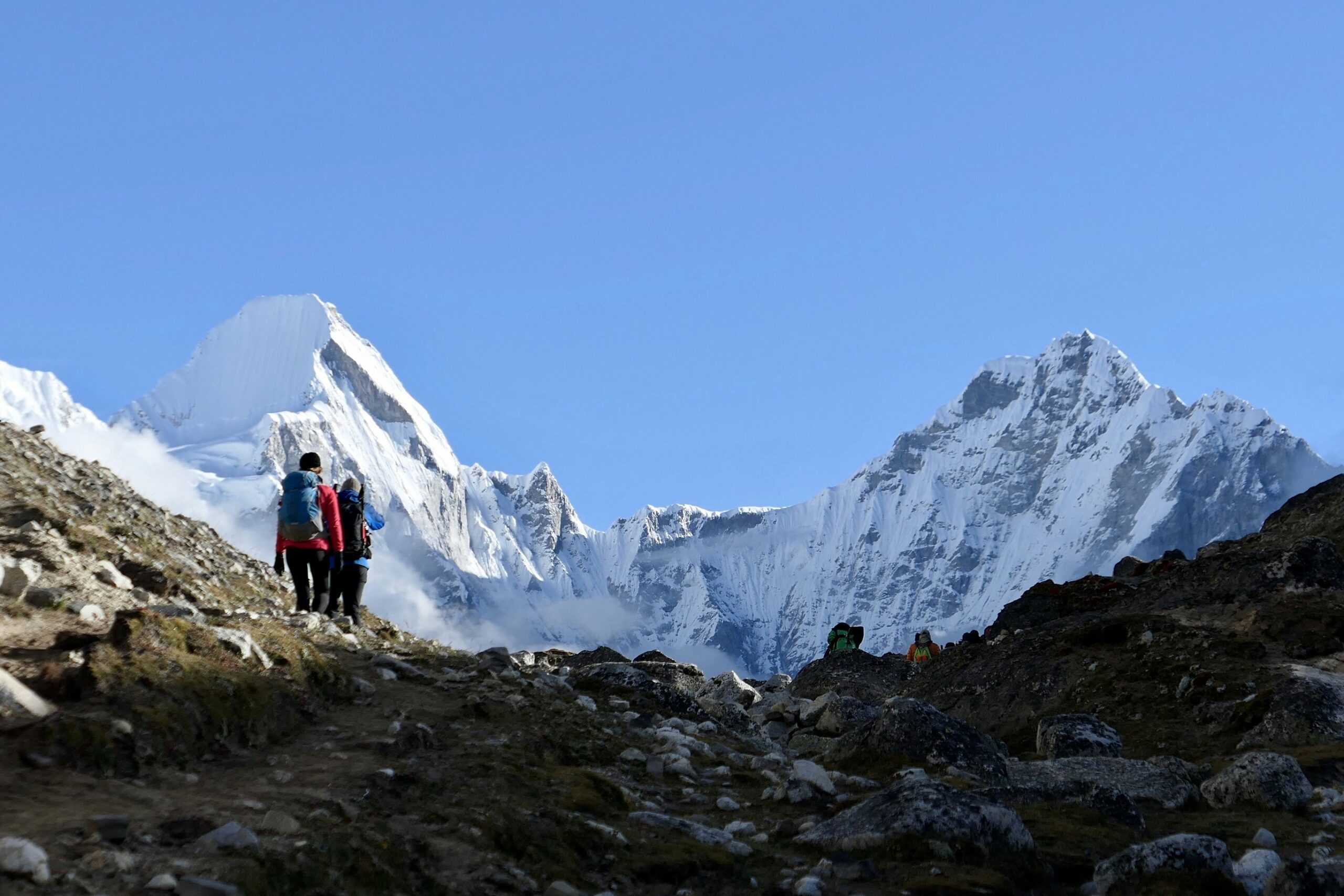
Kongma La at 5,535 metres comes first, crossed from Chhukung to Lobuche over glacier moraine with no teahouses on the way, so the group carries its own food and water for the day. From Base Camp and Kala Patthar, the route crosses Cho La at 5,420 metres, a route that wants an early start to cross before the snow softens, descending to Gokyo on the far side. Renjo La at 5,360 metres closes the loop, with what’s regarded as one of the best views of Everest from any trekking pass in the region, before the long descent back toward Namche.
How it compares to the standard trek
Our standard Everest Base Camp Trek runs 14 days and reaches a maximum of 5,555 metres at Kala Patthar; this route runs a full 20 days, reaches that same 5,555 metres at Kala Patthar, but adds three further days above 5,300 metres crossing the passes themselves. We grade the standard trek Strenuous; this one is Very Strenuous. It genuinely wants prior high-altitude trekking experience, this is not the place to find out how your body handles 5,000 metres for the first time.
What’s included
Three nights of Kathmandu hotel accommodation, full board on the trail, your Lukla flights, national park and municipality permits, a licensed guide, a porter shared between two trekkers, an oximeter for daily monitoring, and a T-shirt, cap and duffel bag are all built into the price, which runs from 2,380 USD solo down to 1,745 USD per person for groups of seven or more. Micro-spikes and gaiters, required year-round on the pass crossings, are not included but can be rented for 15 USD, and the use of a sleeping bag, down jacket or walking poles carries a 10 USD maintenance charge each if you don’t bring your own.
Who this trek actually suits
Trekkers who’ve already done Everest Base Camp, Annapurna Base Camp, or an equivalent high-altitude route and want more. Good hill fitness is necessary but not sufficient, the passes themselves involve steep, loose rock and exposed terrain at altitude where fitness alone doesn’t substitute for experience. If you’re newer to high-altitude trekking, our guide to altitude sickness and the standard Base Camp trek are the honest starting point instead.
Season
Autumn and spring are the only seasons we run this particular route in, the pass crossings depend on stable snow conditions that winter and monsoon don’t reliably offer. Our season-by-season guide to the Everest region covers the broader pattern, which applies here with even less margin for bad weather at the passes themselves.
Booking this trek
Given the altitude and technical terrain involved, we talk through your prior trekking experience honestly before confirming this route, not after you’ve paid. See how booking works, or tell us about your trekking background and we’ll say plainly whether this is the right route for you.