
Autumn (late September to November) and spring (March to May) are the two reliable windows for the Everest Base Camp Trek. Winter and monsoon are both walkable, but neither gives you the same odds of clear mountain views or an on-time Lukla flight. This guide goes through what each season actually feels like on the trail, how the 14-day itinerary itself is built around acclimatisation rather than the calendar, what’s included at each stage, and the questions we get asked most before people book.
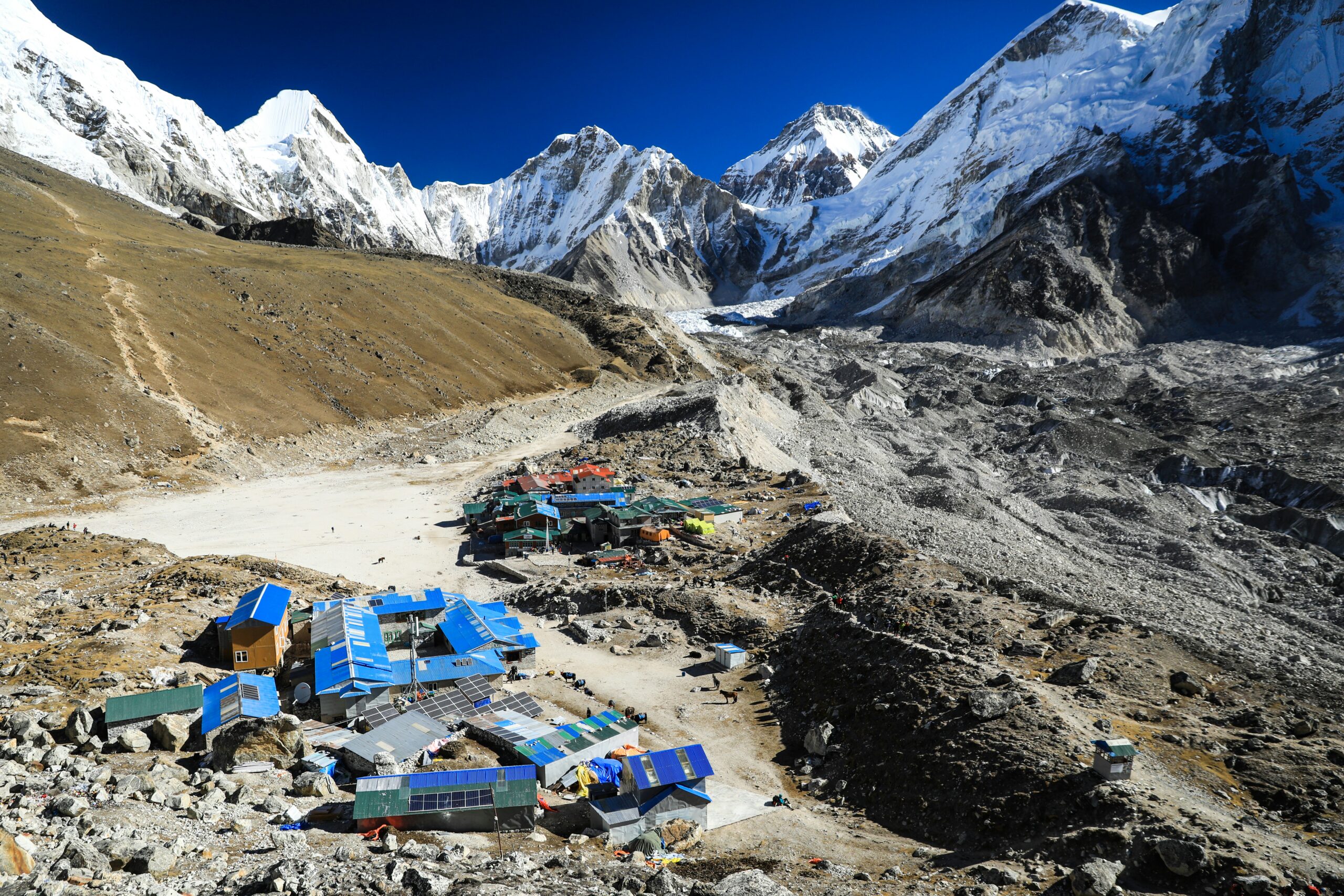
Autumn (late September to November)
The most reliable window of the year. The monsoon has cleared the air, days are cold but stable, and Lukla flights run on schedule more often than in any other season. This is also the busiest time on the trail, so teahouses fill up and you’ll share the main stops with more trekkers than in spring. If you want Namche Bazaar and Tengboche quieter, book the earlier or later end of the window rather than the October peak.
Spring (March to May)
Nearly as reliable as autumn, with the bonus of rhododendron forests in flower lower down the valley. Afternoon haze builds up more than in autumn, so the clearest mountain views tend to come early in the day, and mornings are the time to plan around for photography. Spring is also climbing season on Everest itself, which means more helicopter traffic and a livelier Base Camp, with expedition teams setting up alongside trekking groups.
Winter (December to February)
Cold, especially above Dingboche, but the skies are often the clearest of the year and the trail is quiet. Some high lodges reduce their service or close, so a winter trek needs more flexibility in the itinerary, and a better down jacket than you’d pack for autumn. It suits trekkers who are comfortable with genuinely cold nights and don’t mind having the trail mostly to themselves. We’ve run winter departures successfully, but we’re upfront that it’s a different trip from the postcard version, and we’ll tell you honestly if your dates look workable.
Monsoon (June to August)
The hardest season for this particular route: daily rain, leeches at lower altitude, and the highest chance of a Lukla flight delay in the whole year. We do not recommend Everest Base Camp in monsoon. If you have to travel in these months, Mustang and Dolpo sit behind the main range and stay largely dry, since they’re in the Himalayan rain shadow rather than on the monsoon-facing side of the mountains.
The 14 days, briefly, and why they’re shaped this way
Whichever season you pick, the itinerary underneath it stays the same, because the shape of the trek is built around altitude rather than scenery. It helps to see the whole arc before you book:
- Day 1: Arrive in Kathmandu (1,400 m) and meet your guide at the pre-trip briefing.
- Day 2: Fly to Lukla (2,840 m), trek to Phakding (2,610 m). A deliberately short first day.
- Day 3: Phakding to Namche Bazaar (3,440 m), the first real climb and the first view of Everest.
- Day 4: Acclimatisation day in Namche, with a hike up to Hotel Everest View (3,880 m) and back down to sleep low.
- Day 5: Namche to Tengboche (3,860 m), past Ama Dablam to the monastery.
- Day 6: Tengboche to Dingboche (4,410 m), where the landscape opens out above the treeline.
- Day 7: Second acclimatisation day in Dingboche, hiking up to Nangkartshang (5,083 m) and back down.
- Day 8: Dingboche to Lobuche (4,910 m), past the memorial stones at Thukla Pass.
- Day 9: Lobuche to Gorak Shep (5,190 m), then on to Everest Base Camp itself (5,364 m) and back.
- Day 10: Pre-dawn hike to Kala Patthar (5,555 m) for sunrise, then descend to Pheriche (4,240 m).
- Days 11-12: Descend through Namche Bazaar back to Lukla.
- Day 13: Fly back to Kathmandu, with a buffer built in for weather delays.
- Day 14: International departure.
Notice that two full days, at Namche and Dingboche, exist purely to let your body adjust rather than to add scenery. We don’t shorten this to fit a tighter schedule, in any season.
What the trip actually includes
Four nights in a three-star Kathmandu hotel (two before the trek, two after), full board on the trail, your Lukla flights, Sagarmatha National Park and Pasang Lhamu Rural Municipality permits, your TIMS card, a licensed English-speaking guide, and a porter shared between two trekkers are all built into the price. A first aid kit with an oximeter travels with the guide for daily monitoring. What isn’t included: lunches and dinners while in Kathmandu, your Nepal visa, personal travel insurance, and tips for the crew. The full breakdown is on the Everest Base Camp Trek page itself, alongside the group pricing ladder, which drops from 1,450 USD solo to 1,065 USD per person in a group of seven or more.
What season you pick changes your packing list
Autumn and spring call for a solid insulated jacket and layers, but winter means a heavier down jacket, a warmer sleeping bag rated well below freezing, and more care around exposed skin at the high camps. None of this is exotic gear, but it’s worth getting right before you fly rather than shopping for it in Namche Bazaar at trail prices. Note that this particular trek doesn’t include a complimentary down jacket or sleeping bag in the package; bring your own or arrange a rental in Kathmandu before you leave.
Questions we get asked before people book
Do I need previous trekking experience? No, but you need to be comfortable walking five to seven hours a day on consecutive days. Most people who prepare with regular hill walking for a couple of months manage this trek well, in any of the main seasons.
Is the Lukla flight safe? The landing is dramatic but the operators we use have a strong safety record. The bigger practical issue is weather delays rather than safety, and delays are more common in the shoulder seasons either side of autumn and spring, which is one more reason those two windows are the safer bet for a fixed travel schedule.
Can I charge my phone and get wifi on the trail? At most teahouses, for a fee that rises with altitude. Bring a power bank and don’t count on a connection above Dingboche, whatever season you travel in.
How does booking confirmation work? Because every trip is private and arranged around your dates, bookings are confirmed by our team rather than instantly. You’ll get written confirmation and your private trip link once your guide and permits are secured, and the full booking sequence is laid out step by step before you pay anything.
If the standard route isn’t enough
Some trekkers come back from Base Camp wanting more. The Everest Three High Passes Trek covers the same Base Camp and Kala Patthar highlights but adds Kongma La, Cho La and Renjo La, three passes above 5,300 metres, over 20 days instead of 14. It’s graded Very Strenuous rather than Strenuous and genuinely wants prior high-altitude experience, but the season logic above applies just as much: autumn and spring first, winter with caution, monsoon avoided.
Picking a season for your own trip
If you want the highest odds of clear views and a Lukla flight that leaves on time, book autumn or spring and build a buffer day into your return, same as the buffer already built into day 13 of our itinerary. For something with fewer people on the trail and don’t mind the cold, winter is a genuine option. Our questions and answers page covers more of what comes up before departure, how booking actually works walks through what happens once you’re ready, and you can always tell us your travel dates directly and we’ll say honestly whether they work.