Pokhara Full Day Sightseeing Tour
- Duration
- 1 day
- Max altitude
- 1,100 m
- Difficulty
-
Easy
Difficulty scale
- Easy Short walking days on good trails below about 3,000 m. Suitable for anyone in ordinary health, including families.
- Moderate 5 to 6 hours a day with some steep sections, reaching up to about 4,000 m. A reasonable level of fitness and a few weeks of preparation walking recommended.
- Strenuous 6 to 8 hours a day, high passes or altitudes above 5,000 m, and remote stretches. Good fitness, prior trekking experience and proper acclimatisation days are essential.
- Very strenuous Long days, multiple high passes or technical sections, sustained time above 5,000 m. For experienced, well-conditioned trekkers only.
- Best season
- Autumn (Sep–Nov) · Monsoon (Jun–Aug) · Spring (Mar–May) · Winter (Dec–Feb)
- Group
- Private
- From
- $80.00
Overview
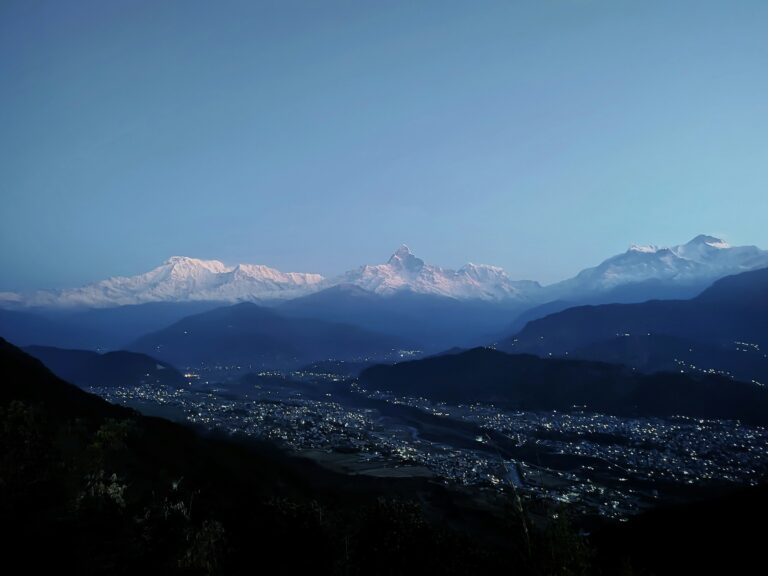
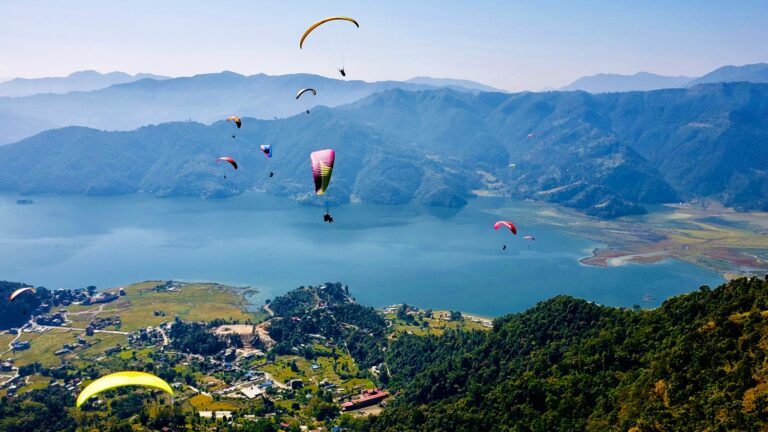
Pokhara is where most people begin or end a trek in the Annapurna, and it deserves a day of its own rather than being treated as a bus stop. The town sits at 820 m beside a lake, with Machhapuchhre standing over it at 6,993 m and close enough to feel like it is leaning in.
This day covers the lake, the limestone gorge and cave on the south side, the mountaineering museum and the pagoda on the ridge. Rowing boat, entry fees and guide are all in the price.
Trip highlights
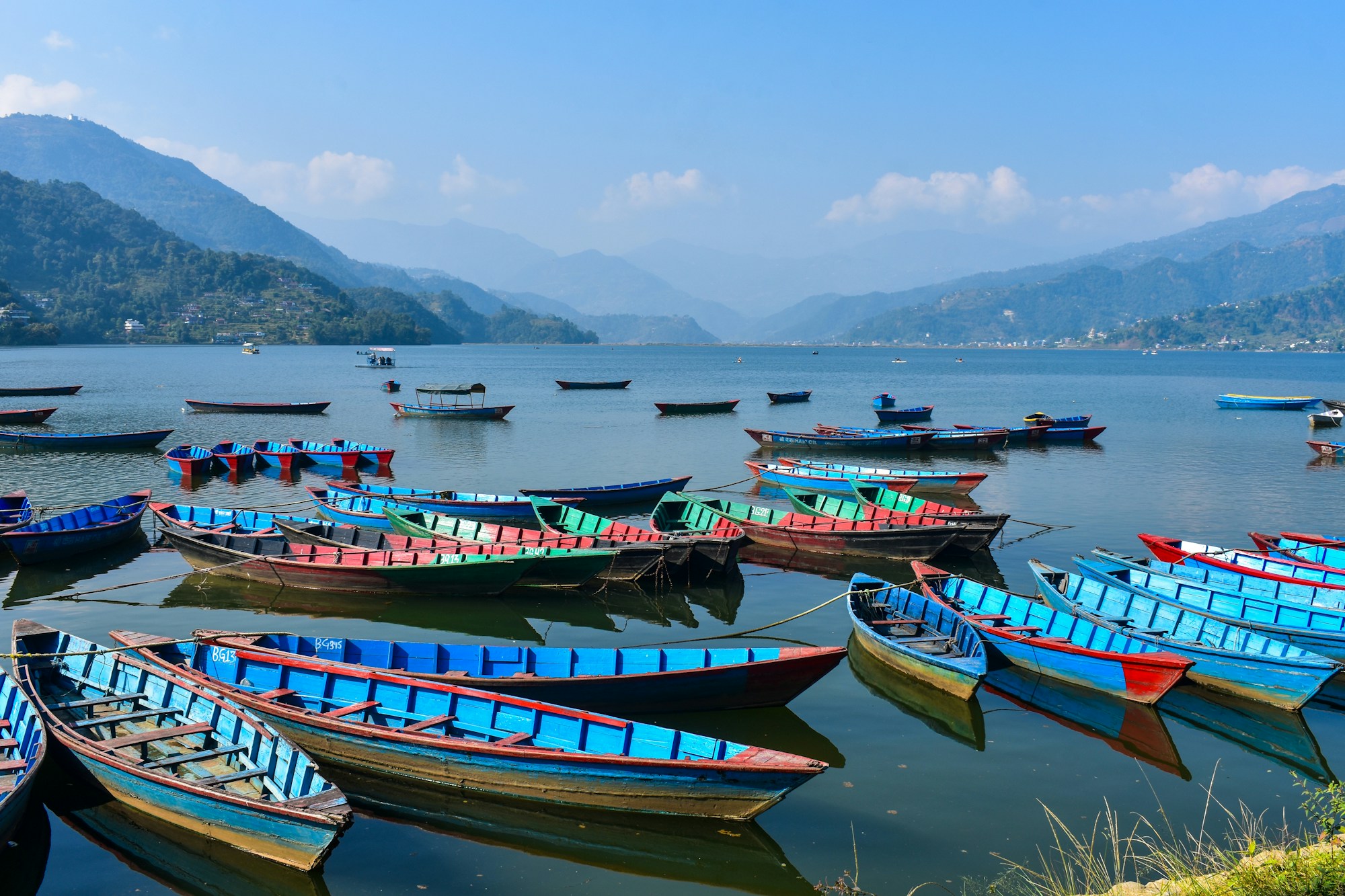
- Rowing boat across Phewa Lake to the Tal Barahi temple on its island
- Devi's Fall and the Gupteshwor Mahadev cave below it
- The International Mountain Museum, built by the Nepal Mountaineering Association
- The World Peace Pagoda on the ridge above the lake
- On a clear day, Machhapuchhre and the Annapurna wall from the pagoda
Day by day
The itinerary
-
Day 1: Phewa Lake, Devi's Fall, the mountain museum and the World Peace Pagoda 1,100 m 8 hours hrs Noneincluded
Pick up from your Pokhara hotel at 9am.
Phewa Lake and Tal Barahi
A rowing boat out to the small island temple in the middle of the lake, which is a Hindu shrine to the goddess Barahi and still in daily use. Early morning is when the water is most likely to hold a reflection of the mountains.
Devi's Fall and Gupteshwor cave
The Pardi Khola drops into a sinkhole here and disappears underground. Across the road, the Gupteshwor Mahadev cave lets you walk down to see the same water from below. The cave floor is wet and the steps are steep in places, so sensible shoes help.
International Mountain Museum
Run by the Nepal Mountaineering Association, with a serious collection on the geology of the Himalaya, the peoples of the high valleys and the history of climbing in Nepal. Worth an hour even if museums are not usually your thing.
Lunch
About an hour, on your own account. Lakeside has everything from a plate of dal bhat to a full restaurant meal.
World Peace Pagoda
Up on the ridge on the south side of the lake, reached by vehicle and a short walk. A white stupa built with Japanese support, and the best single viewpoint in Pokhara: the lake below on one side, the Annapurna range on the other when the air is clear.
Back at your hotel around 5.30pm.
What's included
Included
- Included: Government licensed English speaking guide for the full day
- Included: Private air conditioned tourist vehicle with driver, hotel to hotel
- Included: Rowing boat on Phewa Lake with a local boatman
- Included: Entry fees for Devi's Fall, Gupteshwor cave, the International Mountain Museum and the World Peace Pagoda
- Included: Bottled drinking water in the vehicle
- Included: All government taxes and administrative charges
Not included
- Not included: Lunch, about USD 6 to USD 18 per person
- Not included: Any beverages
- Not included: Tips for your guide, driver and boatman
- Not included: Nepal entry visa, obtainable on arrival at Tribhuvan International Airport
- Not included: Travel insurance
- Not included: Anything not listed under what is included
Know before you go
Suitability & requirements
This tour starts and ends in Pokhara. If you are coming from Kathmandu, a flight is about 25 minutes and the drive is 6 to 8 hours. We can arrange either as an add on.
Your team
Led by a licensed guide
Every route is led by a government-licensed guide from our team. Licences are on record with us before departure, and you'll meet your guide once your trip is confirmed.
Guide language(s): English, Nepali
Group-size pricing
Walk together, pay less
Every trip is private, so the guide, permits and transfers cost the same however many walk. Sharing them is why the per-person price falls: arithmetic, not a sale.
| Group size | per person | You save each |
|---|---|---|
| 1 trekker | $96.00 | base rate |
| 2 to 3 trekkers | $80.00 | $16.00 |
| 4 to 6 trekkers | $75.00 | $21.00 |
| 7 or more | $70.00 | $26.00 |
Per person, including permits, park fees and taxes. Nothing is added at checkout.
Weather
What to expect, month by month
- Autumn (Sep–Nov)The most reliable trekking season: clear air, stable weather and cold nights, right after the monsoon clears.
- Monsoon (Jun–Aug)Wet and cloudy on most routes, though Mustang and Dolpo sit in the rain shadow behind the main range and stay walkable.
- Spring (Mar–May)Warmer than autumn, with rhododendron forests in flower and slightly hazier mountain views as the season goes on.
- Winter (Dec–Feb)Cold and quiet, with the clearest skies of the year at lower altitude. High passes and very high routes are best avoided.
Traveller reviews
What trekkers say
Why book with us