
The Annapurna Base Camp Trek runs 13 days from Kathmandu and back, and unlike the Everest routes it starts with a drive rather than a mountain flight. Here’s the full itinerary, village by village, with the real altitudes and walking times from our own trip plan.
The route, day by day
- Day 1: Arrive in Kathmandu (1,400 m), transfer to your hotel and meet your guide at the pre-trip briefing.
- Day 2: Drive to Pokhara (900 m), seven to nine hours by tourist bus along the Prithvi Highway, with Annapurna and Machhapuchhre visible from the lakeside by evening.
- Day 3: Drive to Birethanti (1,039 m), then trek to Ulleri (2,020 m), a large Magar village, four to five hours.
- Day 4: Trek to Ghorepani (2,840 m) through oak and rhododendron forest, five to six hours.
- Day 5: Pre-dawn hike to Poon Hill (3,210 m) for sunrise over Annapurna, Dhaulagiri and Machhapuchhre, then trek on to Chuile (2,284 m), seven to eight hours in total.
- Day 6: Trek to Sinuwa (2,360 m) via Chhomrong, six to seven hours, crossing the Chhomrong Khola on the way.
- Day 7: Trek to Deurali (3,230 m) past Bamboo and Hinko Cave, six to seven hours.
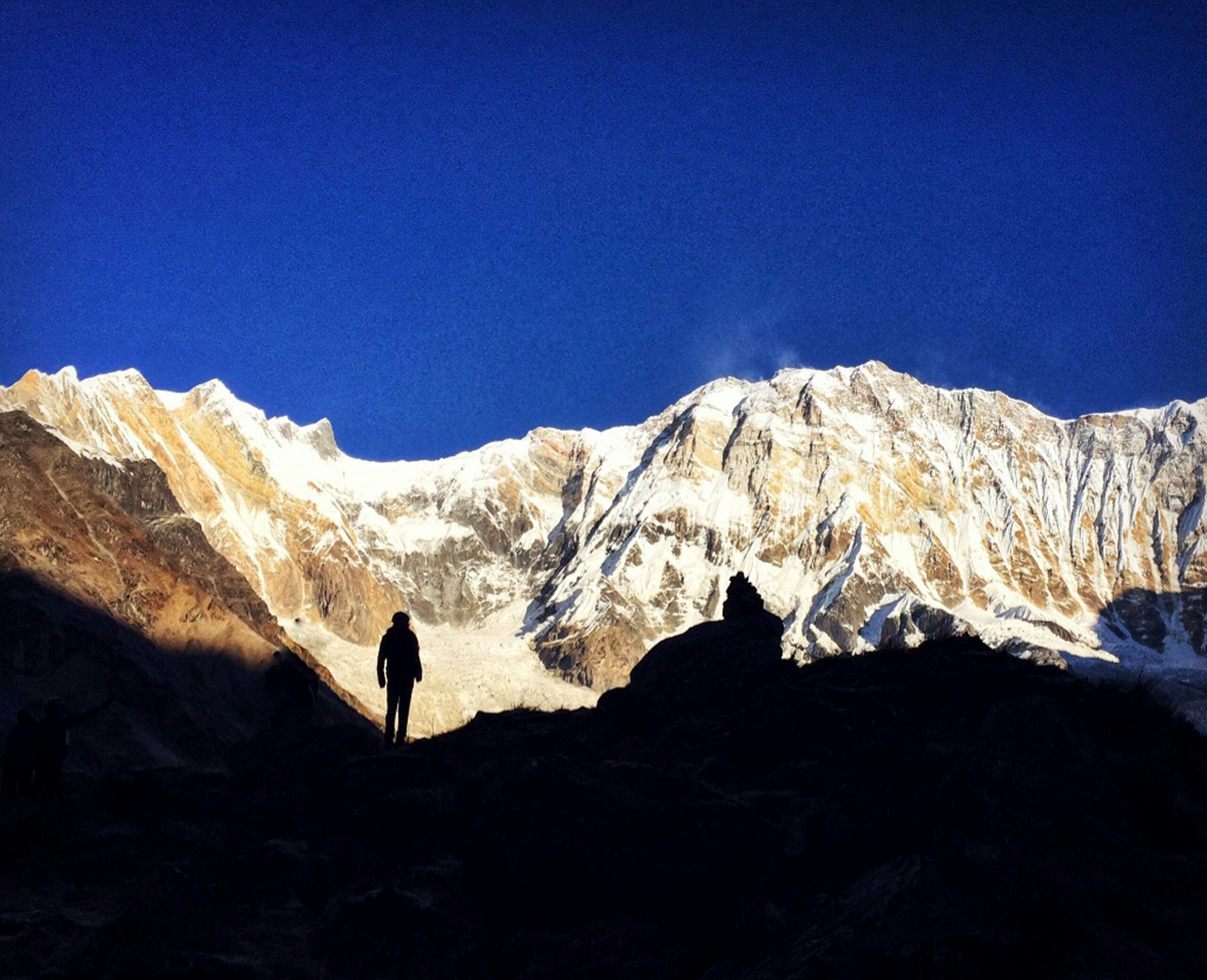
- Day 8: Trek to Annapurna Base Camp itself (4,130 m), via Machhapuchhre Base Camp (3,700 m), five to six hours, arriving inside the Sanctuary ringed by peaks on every side.
- Day 9: Descend to Bamboo (2,345 m), six to seven hours, dropping around 1,700 metres in a single day.
- Day 10: Trek to Jhinu Danda (1,780 m), four to five hours, with natural hot springs waiting at the bottom.
- Day 11: Trek to Syauli Bazaar (1,170 m), then drive back to Pokhara, around four to seven hours combined.
- Day 12: Drive back to Kathmandu, seven to nine hours, with a farewell dinner that evening.
- Day 13: Transfer to the international airport for departure.
Why there’s no dedicated acclimatisation day
Unlike the Everest Base Camp Trek, which builds in two full rest days because it spends a week above 4,000 metres, Annapurna Base Camp’s single high point at 4,130 metres is reached gradually over eight days of steady, moderate climbing, so altitude sickness risk is lower and the itinerary doesn’t need a dedicated acclimatisation day the way the Everest routes do. We still watch the group closely in the final two days above 3,000 metres, for more on how we handle altitude generally, see our guide to altitude sickness on the Everest route, much of which applies here too.
What’s included along the way
Two nights in a three-star Kathmandu hotel, full board on the trail, a licensed guide, a shared porter, your Annapurna Conservation Area Permit, your round-trip Pokhara flight, and a complimentary down jacket and sleeping bag for the duration of the trek are all built into the standard price. The full list, along with group pricing from 1,280 USD solo down to 935 USD for seven or more, is on the Annapurna Base Camp Trek page.
How it compares to Everest Base Camp
If you’re deciding between the two, we’ve written a full side-by-side comparison covering altitude, cost, crowds and what each one includes. In short: Annapurna is shorter, lower, cheaper, and doesn’t depend on a mountain flight, while Everest Base Camp is the bigger, more exposed trip with the bigger name attached to it.
Booking this trek
Every departure is private and arranged around your own dates rather than a fixed group calendar. See how booking works, check our licences and registration if you want to verify us before you commit, or get in touch with your travel dates and we’ll confirm guide and permit availability.