
These are the two most-asked-about treks in Nepal, and trekkers often assume they’re interchangeable. They’re not. Here’s how our Everest Base Camp Trek and Annapurna Base Camp Trek actually compare, using our own published itineraries, inclusions and real group pricing, not marketing copy.
Altitude and difficulty
This is the biggest difference. Everest Base Camp sits close to 5,364 metres, with most itineraries adding a climb to Kala Patthar above 5,500 metres, and we grade it Strenuous. Annapurna Base Camp tops out at 4,130 metres and we grade it Moderate. Altitude sickness risk rises sharply above 4,000 metres, so Everest Base Camp carries meaningfully more of it, even for fit trekkers. If you want the full picture on how we manage that risk, we’ve written separately about altitude sickness on the Everest route.
Duration and how the days are shaped
Our Everest Base Camp itinerary runs 14 days and starts with a Lukla flight; Annapurna Base Camp runs 13 days and starts with a drive to Pokhara and then Birethanti. Everest requires two full acclimatisation days, at Namche and Dingboche, because of the extra altitude. Annapurna’s route gains height more gradually through villages like Ghorepani, Chhomrong and Sinuwa, and reaches its one high point, Base Camp itself at 4,130 metres, without a dedicated rest day built in. For context, our Everest Three High Passes Trek runs a full 20 days and reaches 5,555 metres crossing three passes, which gives a sense of how much longer and harder the route gets once you go beyond the standard Base Camp trek.
What’s included, and where they differ
Both trips include full board on the trail, a licensed English-speaking guide, a shared porter, airport transfers and all permits and taxes. Two differences are worth knowing before you choose. Annapurna Base Camp includes a complimentary down jacket and sleeping bag for the trek, plus a 70-litre duffel bag, a trek map, a T-shirt and a cap; Everest Base Camp does not include a jacket or sleeping bag, so you’ll need your own or a Kathmandu rental. Everest Base Camp’s flight dependency also means its itinerary carries a built-in weather buffer that Annapurna, reached entirely by road and trail, doesn’t need.
Cost
On our group pricing, a solo trekker pays 1,450 USD for Everest Base Camp versus 1,280 USD for Annapurna Base Camp. In a group of seven or more, that gap narrows to 1,065 USD versus 935 USD per person. Most of the difference comes from the Lukla flight, which Everest Base Camp requires and Annapurna Base Camp does not, plus higher lodge costs at extreme altitude. Every price shown includes permits, park fees and local taxes; what each trip excludes is listed in full on its own page, and how payment and deposits work is the same across every trek we run.
Crowds and scenery
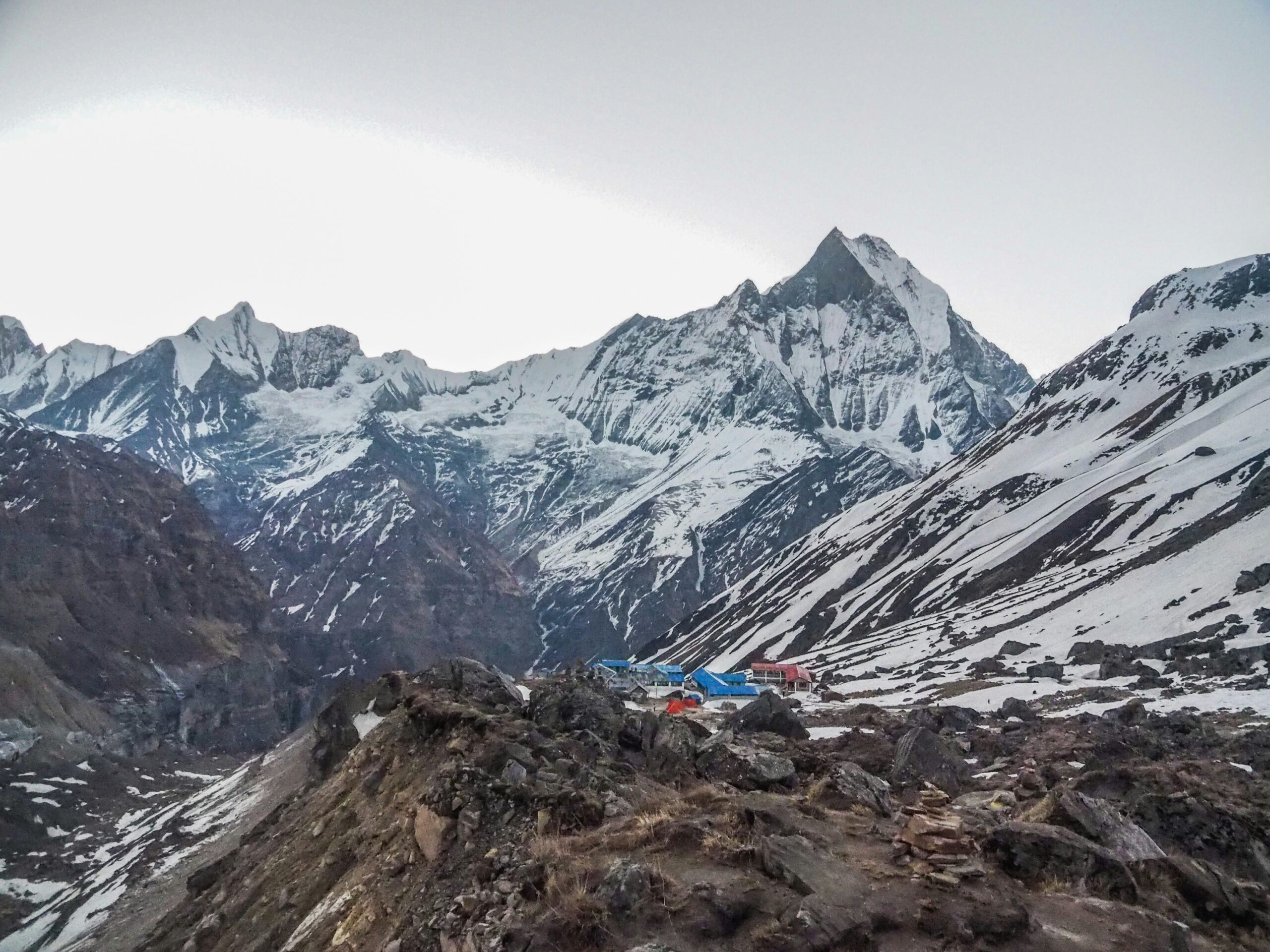
Everest Base Camp is busier, especially in autumn, and the trail passes through Sherpa villages like Namche Bazaar and Dingboche. Annapurna Base Camp is quieter and the walk-in is noticeably greener lower down, through rhododendron and oak forest past Ghorepani and Poon Hill, before opening into the amphitheatre of peaks around the Annapurna Sanctuary itself, with a stop at the Jhinu Danda hot springs on the way out that Everest Base Camp simply has no equivalent of. Neither is more scenic than the other; they’re simply different kinds of landscape, and our regions overview covers what else sits nearby each one if you want to extend the trip.
What else is worth doing around either trek
Trekkers doing either route often add a few days either side of it. A Kathmandu day tour before you head out is an easy way to acclimatise to the time zone and see the valley’s temples and old city, and some trekkers extend into peak climbing once they’ve proven to themselves that altitude isn’t a problem. We can also arrange your Kathmandu hotel and private transport around either itinerary so the logistics outside the trek itself are one less thing to plan.
Which one to pick
If this is your first high-altitude trek, want a shorter flight-free approach, or have limited time, Annapurna Base Camp is the easier choice, and the included jacket and sleeping bag take one more thing off your packing list. If Everest itself is the goal and you’re comfortable with more altitude exposure and a higher budget, Everest Base Camp is worth the extra planning. Either way, see how booking works for what happens after you choose, and our responsible travel page for how we run both trips on the ground.