Phaplu to Everest Base Camp Trek
- Duration
- 20 days
- Max altitude
- 5,545 m
- Difficulty
-
Strenuous
Difficulty scale
- Easy Short walking days on good trails below about 3,000 m. Suitable for anyone in ordinary health, including families.
- Moderate 5 to 6 hours a day with some steep sections, reaching up to about 4,000 m. A reasonable level of fitness and a few weeks of preparation walking recommended.
- Strenuous 6 to 8 hours a day, high passes or altitudes above 5,000 m, and remote stretches. Good fitness, prior trekking experience and proper acclimatisation days are essential.
- Very strenuous Long days, multiple high passes or technical sections, sustained time above 5,000 m. For experienced, well-conditioned trekkers only.
- Best season
- Autumn (Sep–Nov) · Spring (Mar–May)
- Group
- Private
- From
- $1,600.00
Overview
The Khumbu approached on foot from Phaplu instead of flown into Lukla. Longer, but it removes the Lukla flight from the plan entirely and adds days of lower, greener country before the high valleys.
Every departure is private and led by a government-licensed Nepali guide, so the plan flexes to your party and to the mountain. Permits, park fees and local taxes are inside the price you see.
Trip highlights
- No Lukla flight in the itinerary
- The old walking approach to the Khumbu
- Lower Solu country before the high Khumbu
- Everest Base Camp and Kala Patthar
Day by day
The itinerary
-
Day 1: Arrive in Kathmandu (1,400m) 1,400 m Hotel
Our representative meets you at Tribhuvan International Airport and transfers you to the hotel, followed by the trek briefing and a kit check.
-
Day 2: Travel to Phaplu (2,470m) 2,470 m 9-10 by road hrs Teahouse
A long day east by road, or a short flight if you prefer to buy the time back. Phaplu is the administrative centre of Solu and the start of the old walking approach that everyone used before the Lukla strip existed.
-
Day 3: Phaplu to Ringmo (2,720m) 2,720 m 6-7 hrs Teahouse
Into the walking straight away, through farmland and pine forest above the Solu valley. Apple orchards around Ringmo, and a first look north at the peaks you will spend a fortnight approaching.
-
Day 4: Ringmo to Junbesi (2,675m) over the Lamjura La (3,530m) 3,530 m 6-7 hrs Teahouse
The first pass of the trek, through moss-hung rhododendron and fir that is some of the loveliest forest in Nepal, especially in spring. Down the far side to Junbesi, a tidy Sherpa village with a large gompa and a good deal of charm.
-
Day 5: Junbesi to Nunthala (2,220m) 2,220 m 6-7 hrs Teahouse
Around the hillside with the first distant view of Everest from a ridge above the village, then a long descent to the Dudh Koshi and up again to Nunthala. Rice terraces and subtropical heat at the bottom of it.
-
Day 6: Nunthala to Bupsa (2,360m) 2,360 m 6-7 hrs Teahouse
Down to cross the Dudh Koshi and up the far side through Jubing and Kharikhola. Rai and Sherpa villages, cardamom gardens and a great deal of up and down. The valley is beginning to steepen.
-
Day 7: Bupsa to Surke (2,290m) 2,290 m 6-7 hrs Teahouse
Climbing through forest to the ridge at Kharte and then traversing high above the gorge, with the Dudh Koshi a long way below. Surke sits just under Lukla, so from here you are on the main Everest trail.
-
Day 8: Surke to Phakding (2,610m) 2,610 m 4-5 hrs Teahouse
You join the traffic today. The trail from Lukla comes in above Surke and the difference is immediate: lodges, mule trains and other trekkers, most of whom flew in this morning. You will be acclimatised and they will not.
-
Day 9: Phakding to Namche Bazaar (3,440m) 3,440 m 6-7 hrs Teahouse
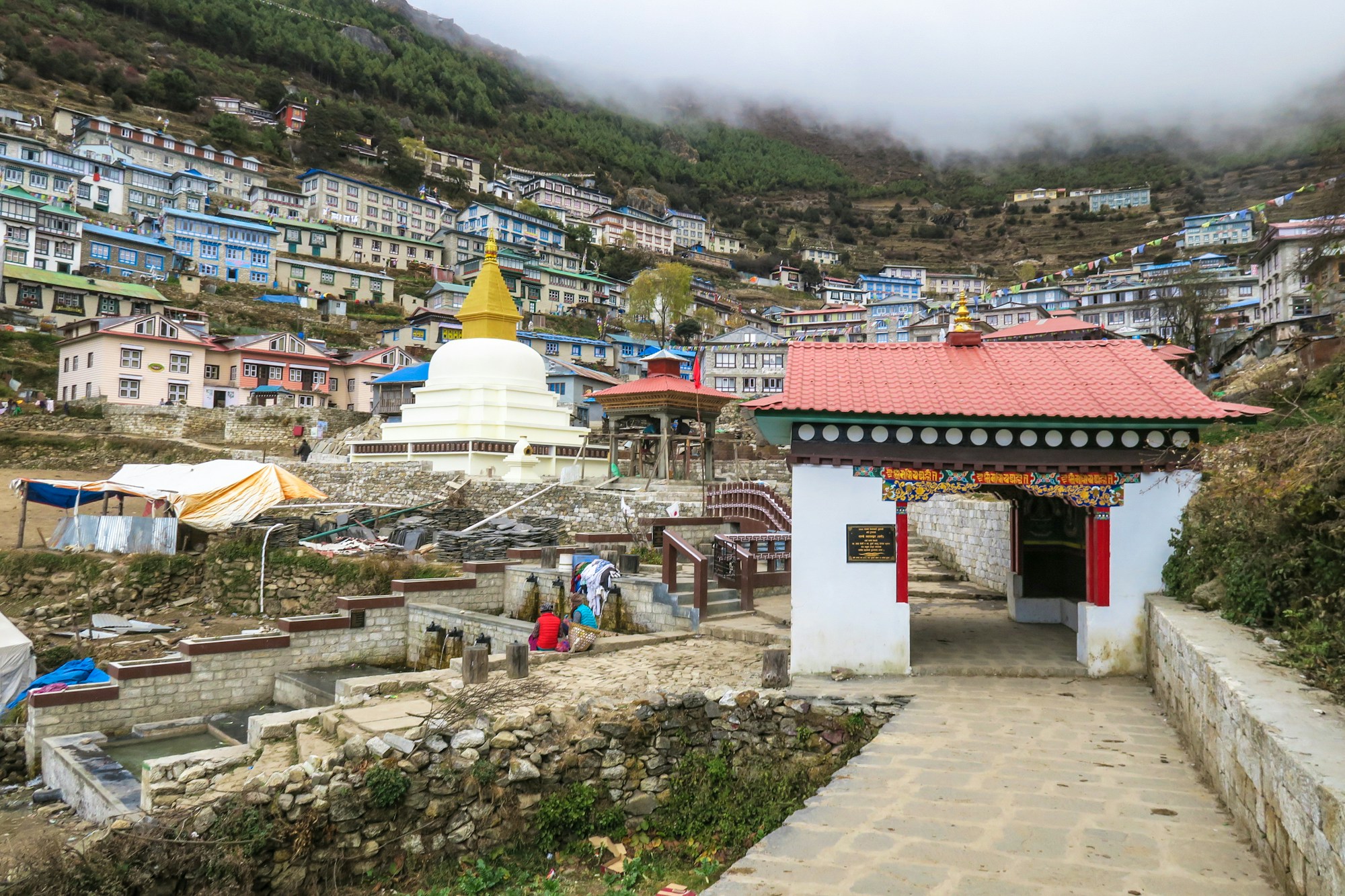
Suspension bridges over the Dudh Koshi, the national park checkpost at Monjo, then the long climb from the Hillary Bridge to Namche, with a first glimpse of Everest through the trees on the way up.
-
Day 10: Namche: acclimatisation day 3,880 m 4-5 hrs Teahouse
Up to the Everest View Hotel at 3,880m for the view over Everest, Lhotse and Ama Dablam, then across to Khumjung and Khunde before dropping back to Namche to sleep.
-
Day 11: Namche to Tengboche (3,860m) 3,860 m 5-6 hrs Teahouse
The level traverse with Ama Dablam ahead, the steep drop to Phunki Tenga, then the climb through forest to the monastery. Afternoon prayers are open to visitors who arrive in time.
-
Day 12: Tengboche to Dingboche (4,410m) 4,410 m 5-6 hrs Teahouse
Through Deboche and past Pangboche, the oldest settlement in the valley. The treeline is behind you by late morning. Dingboche sits in a patchwork of stone-walled potato fields under Ama Dablam.
-
Day 13: Dingboche: acclimatisation day 5,000 m 4-5 hrs Teahouse
Up the ridge towards Nangkartshang, around 5,000m, for the view to Island Peak and Makalu, then back down to Dingboche to sleep.
-
Day 14: Dingboche to Lobuche (4,940m) 4,940 m 5-6 hrs Teahouse
Up the valley to Dughla and the steep pull onto the Khumbu glacier's terminal moraine. The memorial chortens at the top of that climb are for climbers who died on Everest, and it is a quiet place. Then an easier walk alongside the glacier to Lobuche.
-
Day 15: Lobuche to Gorak Shep (5,164m) and Everest Base Camp (5,364m) 5,364 m 7-8 hrs Teahouse
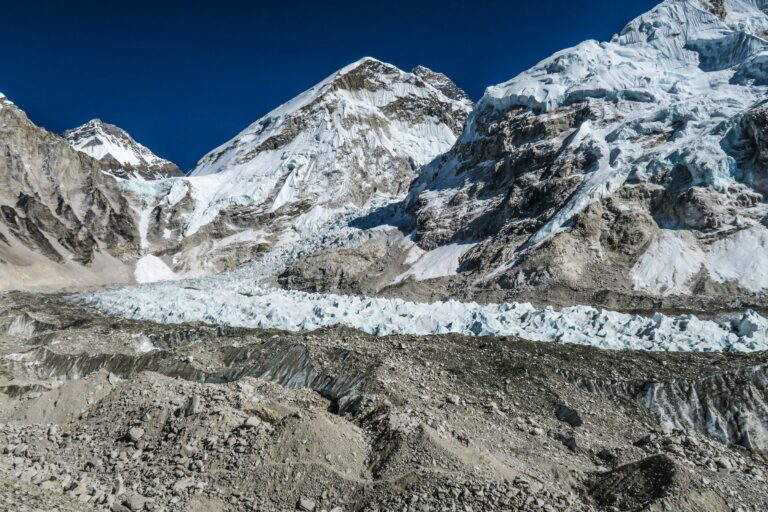
Over rough moraine to Gorak Shep, then out along the glacier to Base Camp. In spring it is a tented city under the Khumbu Icefall; the rest of the year it is ice, prayer flags and the noise the glacier makes. Back to Gorak Shep for the night.
-
Day 16: Kala Patthar (5,545m), then down to Pheriche (4,240m) 5,545 m 7-8 hrs Teahouse
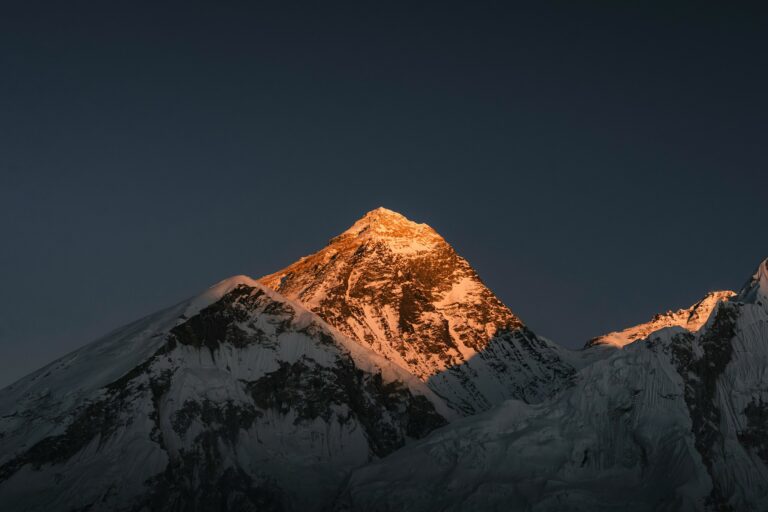
Up in the dark for the best view of Everest on the whole route: the south-west face entire, with Nuptse and Pumori either side. Then back for breakfast and a long descent to Pheriche, where the air is thick enough to sleep properly again.
-
Day 17: Pheriche to Namche Bazaar (3,440m) 3,440 m 6-7 hrs Teahouse
A long descent back past Pangboche and Tengboche and around the traverse to Namche. Trees, birds and appetite all return on this stretch.
-
Day 18: Namche to Lukla (2,840m) 2,840 m 7-8 hrs Teahouse
The last walking day: down to the Hillary Bridge, along the river through Monjo and Phakding, then the final climb into Lukla. The crew usually marks the end of the trek here.
-
Day 19: Fly to Kathmandu (1,400m) 1,400 m Hotel
The morning flight out, weather permitting. You walked in, so only the way out depends on it. Afternoon free in Kathmandu.
-
Day 20: Spare day in Kathmandu, or departure 1,400 m
The buffer for a delayed Lukla flight. If the flight ran on time the day is yours. Our representative takes you to the airport about 3 hours before your onward flight.
Altitude profile
The climb, day by day
Comfort tiers
Choose your level of comfort
| Amenity | Standardfrom $1,920.00 | Comfortfrom $2,265.60 | Luxuryfrom $2,784.00 |
|---|---|---|---|
| Kathmandu hotel | 3★ | 4★ | 5★ |
| Trail accommodation | Standard teahouse | Best lodge in each village | Premium lodge where the route has one |
| Porter support | Shared porter | Private porter, lighter load | Extra porter, carry almost nothing |
| Transfers | Shared | Private | Private, throughout |
What's included
Included
- Included: All airport transfers in a private vehicle
- Included: Two nights' twin-sharing accommodation with breakfast at a 3-star hotel in Kathmandu, plus a third if the spare day is used
- Included: Twin-sharing teahouse accommodation for 17 nights on the trek
- Included: All meals on the trek: breakfast, lunch and dinner, with tea or coffee
- Included: Seasonal fruit on the trail
- Included: Ground transport from Kathmandu to Phaplu
- Included: One-way flight Lukla to Kathmandu at the end of the trek, including the Ramechhap transfer if your dates fall in the season when flights move there
- Included: Sagarmatha National Park entry fee, the Khumbu Pasang Lhamu Rural Municipality permit and the Solu area entry fees
- Included: A government-licensed, wilderness first-aid trained, English-speaking guide
- Included: Porters carrying your kit, one porter for every two trekkers
- Included: All wages, meals, accommodation, insurance and equipment for guide and porters
- Included: Duffel bag, down jacket and sleeping bag on loan for the trek
- Included: A comprehensive first aid kit, including a pulse oximeter used to check oxygen levels daily above 3,500 m
- Included: Trekking map and trip completion certificate
- Included: A farewell dinner in Kathmandu
- Included: All government taxes and official expenses
Not included
- Not included: International airfare and the Nepal entry visa
- Not included: Travel insurance, which must cover helicopter evacuation and medical treatment to at least 5,600 m
- Not included: Lunch and dinner in Kathmandu, apart from the farewell dinner
- Not included: Bottled and boiled drinking water, and all other drinks including tea and coffee taken outside meals
- Not included: Hot showers, battery charging and wifi at the lodges, all of which are charged by the hour or the item above Namche
- Not included: A flight from Kathmandu to Phaplu instead of the road transfer, which we can arrange at extra cost
- Not included: Personal trekking clothing and equipment
- Not included: Tips for the guide, porters and driver
- Not included: Extra costs caused by weather, flight delays, landslides, illness, early departure or any other event beyond our control
- Not included: Anything not listed under what is included
Your team
Led by a licensed guide
Every route is led by a government-licensed guide from our team. Licences are on record with us before departure, and you'll meet your guide once your trip is confirmed.
Guide language(s): English, Nepali
Group-size pricing
Walk together, pay less
Every trip is private, so the guide, permits and transfers cost the same however many walk. Sharing them is why the per-person price falls: arithmetic, not a sale.
| Group size | per person | You save each |
|---|---|---|
| 1 trekker | $1,920.00 | base rate |
| 2 to 3 trekkers | $1,600.00 | $320.00 |
| 4 to 6 trekkers | $1,505.00 | $415.00 |
| 7 or more | $1,410.00 | $510.00 |
Per person, including permits, park fees and taxes. Nothing is added at checkout.
Weather
What to expect, month by month
- Autumn (Sep–Nov)The most reliable trekking season: clear air, stable weather and cold nights, right after the monsoon clears.
- Spring (Mar–May)Warmer than autumn, with rhododendron forests in flower and slightly hazier mountain views as the season goes on.
Traveller reviews
What trekkers say
Why book with us