Nepal Grand Cultural Tour
- Duration
- 11 days
- Max altitude
- 2,195 m
- Difficulty
-
Easy
Difficulty scale
- Easy Short walking days on good trails below about 3,000 m. Suitable for anyone in ordinary health, including families.
- Moderate 5 to 6 hours a day with some steep sections, reaching up to about 4,000 m. A reasonable level of fitness and a few weeks of preparation walking recommended.
- Strenuous 6 to 8 hours a day, high passes or altitudes above 5,000 m, and remote stretches. Good fitness, prior trekking experience and proper acclimatisation days are essential.
- Very strenuous Long days, multiple high passes or technical sections, sustained time above 5,000 m. For experienced, well-conditioned trekkers only.
- Best season
- Autumn (Sep–Nov) · Spring (Mar–May) · Winter (Dec–Feb)
- Group
- Private
- From
- $1,120.00
Overview
Most tours pick two or three places. This one takes eleven days and does the country properly: the medieval cities of the valley, the hill towns on the old trade road, the lake and mountain wall at Pokhara, the Buddha’s birthplace on the Terai and finally the jungle at Chitwan.
It is a driving and walking tour, not a trek. The highest point is the valley rim at 2,195 m, there are no permits beyond park and heritage fees, and every night is in a hotel or a lodge with a bed and a shower.
Trip highlights
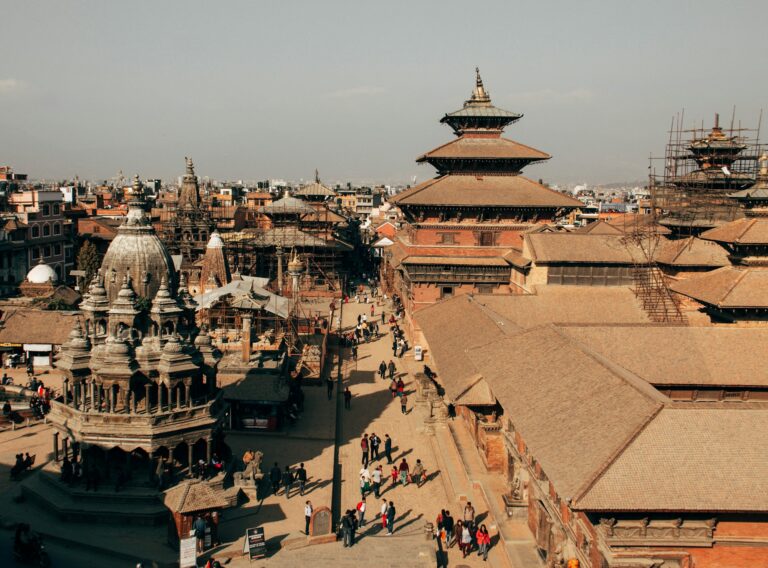
- All three royal cities: Kathmandu, Patan and Bhaktapur
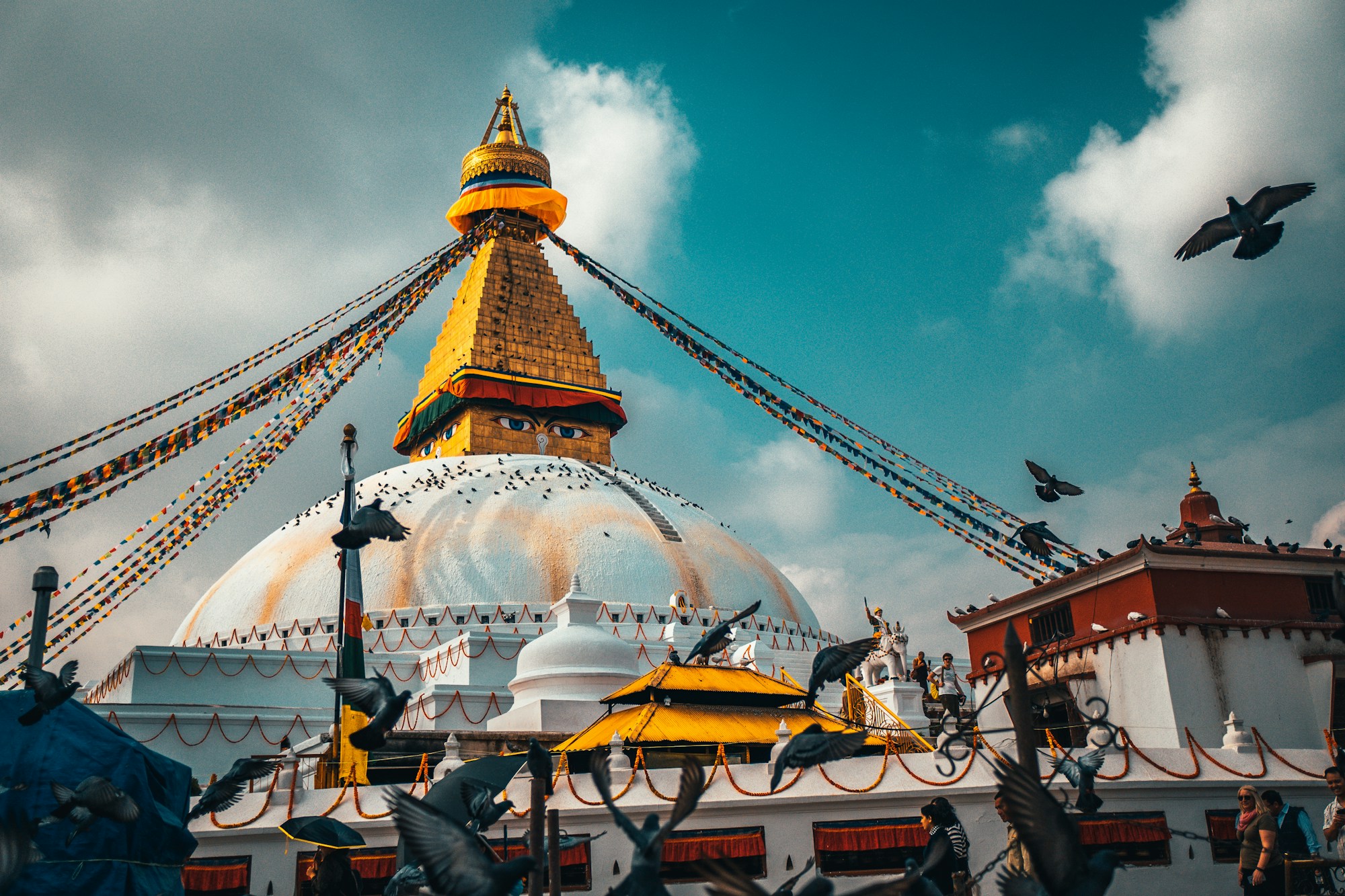
- Boudhanath, Pashupatinath, Swayambhunath and Changu Narayan
- Bandipur's car free Newar bazaar and Gorkha Durbar
- Sarangkot sunrise over Dhaulagiri, Annapurna and Machhapuchhre
- Lumbini: the Maya Devi temple, the Ashoka pillar and the monastic zone
- Chitwan National Park: jeep safari, canoe and a guided jungle walk
- Sunset and sunrise from Nagarkot on the valley rim to finish
Day by day
The itinerary
-
Day 1: Arrive in Kathmandu 1,400 m Transfer only hrs Three star hotel, breakfast included None
Met at Tribhuvan International Airport and transferred to your hotel. Your guide comes by in the evening to go through the eleven days, confirm timings and answer anything you want to ask before you start.
-
Day 2: Kathmandu: Durbar Square, Swayambhunath, Pashupatinath, Boudhanath 1,400 m 8 to 9 hours hrs Three star hotel, breakfast included Breakfast
The classic valley day. The old royal square and the Kumari Ghar in the morning, then Swayambhunath on its hill. After lunch, Pashupatinath on the Bagmati with its cremation ghats, then Boudhanath in the late afternoon when the kora fills up and the lamps go on.
-
Day 3: Patan, Bhaktapur and Changu Narayan 1,550 m 9 hours hrs Three star hotel, breakfast included Breakfast
Patan first: the stone Krishna Mandir, the Patan Museum and the Golden Temple. Then Bhaktapur on foot, with Durbar Square, the Nyatapola and Potters' Square. Changu Narayan last, on its ridge above the city, the oldest temple in Nepal with fifth century stone carving and an inscription to match.
-
Day 4: Kathmandu to Bandipur 1,030 m 4 to 5 hours driving hrs Heritage guest house, breakfast included Breakfastanddinner
West on the Prithvi Highway along the Trishuli, then up a steep side road to the ridge. Bandipur's bazaar street is closed to vehicles, so you walk in. Late afternoon at Tundikhel at the end of the ridge, where the Himalaya lines up along the northern horizon from Dhaulagiri to Langtang.
-
Day 5: Manakamana cable car and Gorkha Durbar 1,430 m 7 hours hrs Three star hotel, breakfast included Breakfastanddinner
Down to the highway and a ten minute cable car up to Manakamana, one of the busiest pilgrimage temples in Nepal. Animal sacrifice is part of the practice here and is visible, so decide in advance how close you want to be.
Then north to Gorkha and up to the Durbar: palace, fort and temple on one ridge, the seat of Prithvi Narayan Shah who began the unification of Nepal in 1743. Manaslu stands at 8,163 m directly north of the courtyard.
-
Day 6: Gorkha to Pokhara 820 m 3 to 4 hours driving hrs Three star hotel, breakfast included Breakfast
About three and a half hours west, dropping back to 820 m and the lake. The afternoon is free. Lakeside is a good place to do nothing, and a rowing boat out to the Tal Barahi temple on the island is there if you want it.
-
Day 7: Sarangkot sunrise and a full day in Pokhara 1,600 m 9 to 10 hours hrs Three star hotel, breakfast included Breakfast
Up at 5am for Sarangkot at 1,600 m, where Dhaulagiri, Annapurna South, Annapurna I, Hiunchuli and Machhapuchhre stand in a single line and catch colour before the sun clears the horizon. Clear mornings are the rule from October to February and the exception in the monsoon.
Breakfast back in town, then Devi's Fall, the Gupteshwor cave, the International Mountain Museum and the World Peace Pagoda for the late afternoon.
-
Day 8: Pokhara to Lumbini 150 m 6 hours driving hrs Three star hotel, breakfast included Breakfastanddinner
South out of the hills and down onto the Terai, about six hours. The temperature changes noticeably.
Check in near the sacred garden. If there is light left, walk in for the last hour of the day, which is when the pilgrim crowds have thinned and the chanting starts.
-
Day 9: Lumbini: the sacred garden and the monastic zone 150 m 8 hours hrs Three star hotel, breakfast included Breakfastanddinner
A full day inside the UNESCO property. The Maya Devi temple shelters the excavated foundations and the marker stone identified as the exact spot of the birth. Beside it stands the Ashoka pillar, planted in 249 BCE, whose inscription is the oldest evidence that this is the place.
Then the monastic zone, where countries across the Buddhist world have each built in their own tradition: the Myanmar Golden Temple, the Royal Thai Monastery, the German Lotus Stupa with its interior murals. Cycle rickshaw between them, which is how the site is meant to be crossed.
-
Day 10: Lumbini to Chitwan, and an afternoon at Sauraha 150 m 5 hours driving hrs Jungle lodge, all meals included Breakfast/lunchanddinner
East along the Terai to Sauraha, about five hours. Check in at the jungle lodge, then down to the Rapti for sunset once the heat drops. Your naturalist will brief you on the park and on the rules for walking in a place that has wild rhino in it.
-
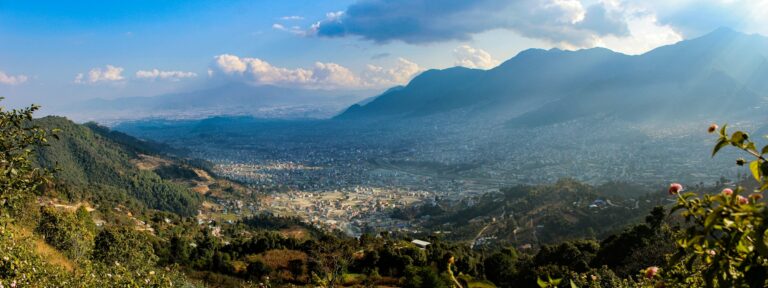
Day 11: Chitwan safari day, then back to Kathmandu via Nagarkot 2,195 m Full day hrs Ridge hotel, breakfast included Breakfastandlunch
An early jeep safari into the park for rhino, deer, gaur and whatever else the morning gives you, then a dugout canoe on the Rapti for gharial and mugger crocodile and the birdlife on the banks.
After lunch, the drive back up to the valley, and rather than finishing in city traffic, on to Nagarkot on the eastern rim at 2,195 m for sunset over the hills and, on a clear evening, a long line of Himalaya with Everest at the far end. Stay the night on the ridge for sunrise, then down to Kathmandu or the airport in the morning.
⚠ This last day is long. If your international flight is early on day 11, say so when you book and we will move Nagarkot to day 10 and give you a quiet final morning instead.
Altitude profile
The climb, day by day
Comfort tiers
Choose your level of comfort
| Amenity | Standardfrom $1,345.00 | Comfortfrom $1,587.10 | Luxuryfrom $1,950.25 |
|---|---|---|---|
| Kathmandu hotel | 3★ | 4★ | 5★ |
| Trail accommodation | Standard teahouse | Best lodge in each village | Premium lodge where the route has one |
| Porter support | Shared porter | Private porter, lighter load | Extra porter, carry almost nothing |
| Transfers | Shared | Private | Private, throughout |
What's included
Included
- Included: All airport and inter city transfers by private tourist vehicle
- Included: Ten nights accommodation with breakfast: three star hotels, a heritage guest house in Bandipur and a jungle lodge in Chitwan
- Included: All meals at Chitwan, dinner on six other nights, breakfast every day
- Included: Government licensed English speaking guide for the whole eleven days
- Included: Entry fees for every heritage site and monument on the itinerary
- Included: Chitwan National Park permits, jeep safari and canoe with a licensed naturalist
- Included: Manakamana cable car return ticket
- Included: Cycle rickshaw inside the Lumbini monastic zone
- Included: Sarangkot and Nagarkot viewpoint fees
- Included: All government taxes and administrative charges
Not included
- Not included: International flights and airport departure tax
- Not included: Any domestic flights, should you want to replace a drive with one
- Not included: Lunch on all days except at Chitwan, about USD 8 to USD 20 per person
- Not included: Any beverages, including bottled and boiled water
- Not included: Tips for your guide, driver, naturalist and lodge staff
- Not included: Nepal entry visa, obtainable on arrival at Tribhuvan International Airport
- Not included: Travel insurance, which we ask every traveller to carry
- Not included: Personal expenses and anything not listed under what is included
Know before you go
Suitability & requirements
This is a lot of road. Eleven days covers roughly 900 km of driving on Nepali highways, which are slow and in places rough. If that sounds like too much, the eight day Kathmandu, Chitwan and Pokhara tour covers the same country with three fewer stops. October to March is the best window, since Lumbini and Chitwan are very hot from April and wet from July.
Your team
Led by a licensed guide
Every route is led by a government-licensed guide from our team. Licences are on record with us before departure, and you'll meet your guide once your trip is confirmed.
Guide language(s): English, Nepali
Group-size pricing
Walk together, pay less
Every trip is private, so the guide, permits and transfers cost the same however many walk. Sharing them is why the per-person price falls: arithmetic, not a sale.
| Group size | per person | You save each |
|---|---|---|
| 1 trekker | $1,345.00 | base rate |
| 2 to 3 trekkers | $1,120.00 | $225.00 |
| 4 to 6 trekkers | $1,050.00 | $295.00 |
| 7 or more | $985.00 | $360.00 |
Per person, including permits, park fees and taxes. Nothing is added at checkout.
Weather
What to expect, month by month
- Autumn (Sep–Nov)The most reliable trekking season: clear air, stable weather and cold nights, right after the monsoon clears.
- Spring (Mar–May)Warmer than autumn, with rhododendron forests in flower and slightly hazier mountain views as the season goes on.
- Winter (Dec–Feb)Cold and quiet, with the clearest skies of the year at lower altitude. High passes and very high routes are best avoided.
Traveller reviews
What trekkers say
Why book with us