Bandipur and Gorkha Heritage Tour
- Duration
- 5 days
- Max altitude
- 1,430 m
- Difficulty
-
Easy
Difficulty scale
- Easy Short walking days on good trails below about 3,000 m. Suitable for anyone in ordinary health, including families.
- Moderate 5 to 6 hours a day with some steep sections, reaching up to about 4,000 m. A reasonable level of fitness and a few weeks of preparation walking recommended.
- Strenuous 6 to 8 hours a day, high passes or altitudes above 5,000 m, and remote stretches. Good fitness, prior trekking experience and proper acclimatisation days are essential.
- Very strenuous Long days, multiple high passes or technical sections, sustained time above 5,000 m. For experienced, well-conditioned trekkers only.
- Best season
- Autumn (Sep–Nov) · Spring (Mar–May) · Winter (Dec–Feb)
- Group
- Private
- From
- $520.00
Overview
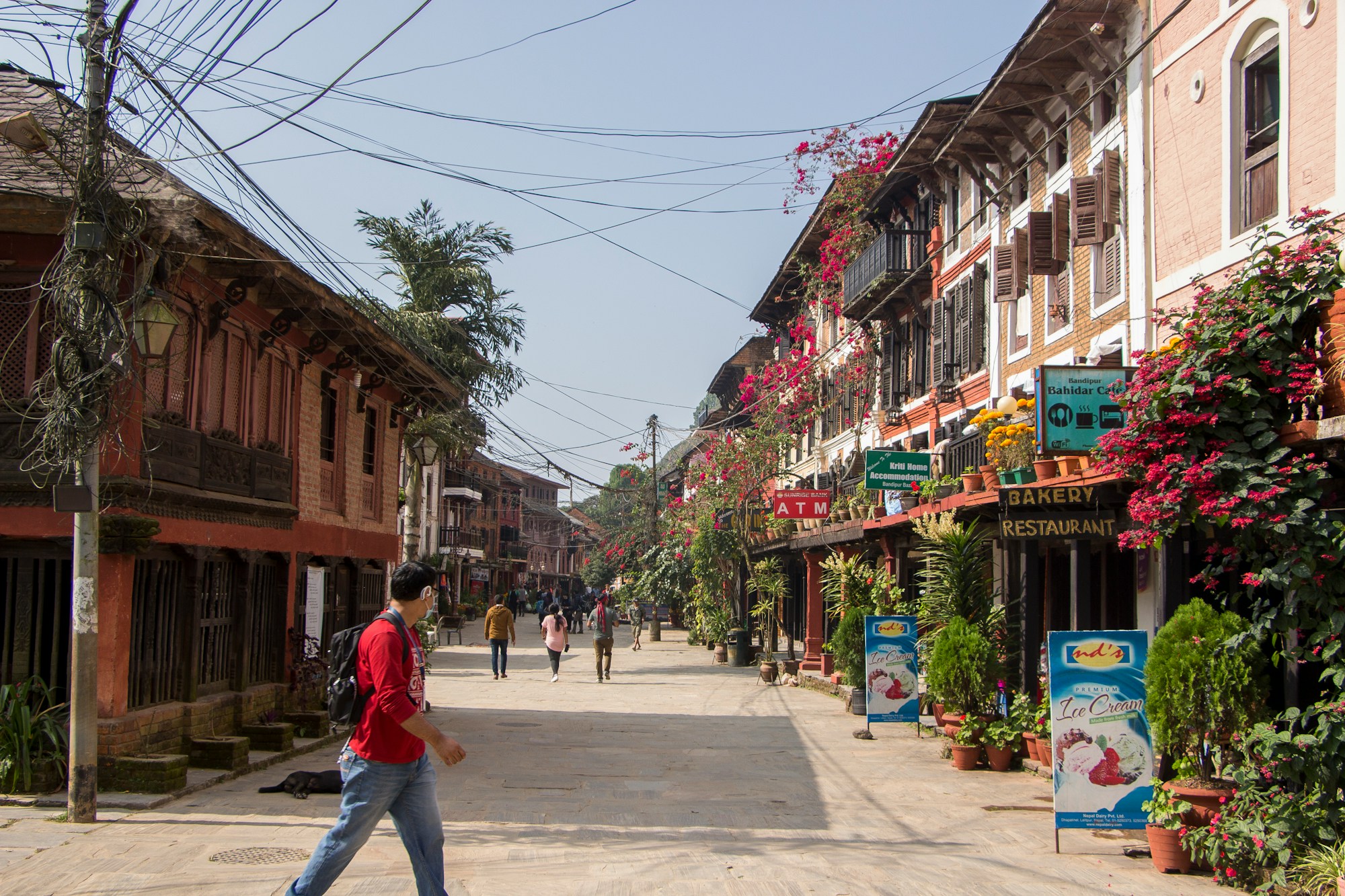
The highway between Kathmandu and Pokhara passes below two of the more interesting places in the country and almost nobody stops at either. Bandipur sits on a ridge at 1,030 m, a Newar bazaar town that prospered on the India to Tibet trade and then was bypassed when the highway went through the valley instead. Its main street has no cars on it and the buildings are the originals.
Gorkha is where Prithvi Narayan Shah ruled a small hill kingdom before setting out in 1743 to conquer the valley and, eventually, to make Nepal. His palace is still on the ridge above the town.
This is the tour for a second visit, or for a first visit by someone who would rather not spend it in queues.
Trip highlights
- Bandipur's car free bazaar street, largely unchanged since the 1800s
- Sunrise over the Annapurna and Manaslu ranges from Tundikhel
- The Siddha Gufa cave, one of the largest in Nepal
- Gorkha Durbar, the hilltop palace where Nepal's unification began
- The Manakamana temple, reached by cable car
- Short walks between hill villages, no trekking permits needed
Day by day
The itinerary
-
Day 1: Kathmandu to Bandipur 1,030 m 4 to 5 hours driving hrs Heritage guest house, breakfast included Dinner
West out of the valley on the Prithvi Highway, following the Trishuli, then a turn up a side road that climbs steeply for eight kilometres to the ridge. Four to five hours in total.
Vehicles stop at the edge of Bandipur, because the bazaar street is closed to traffic. Check in, then walk. The street runs along the ridge with the old Newar shophouses on both sides, neoclassical shutters and carved windows, and both ends open onto a view.
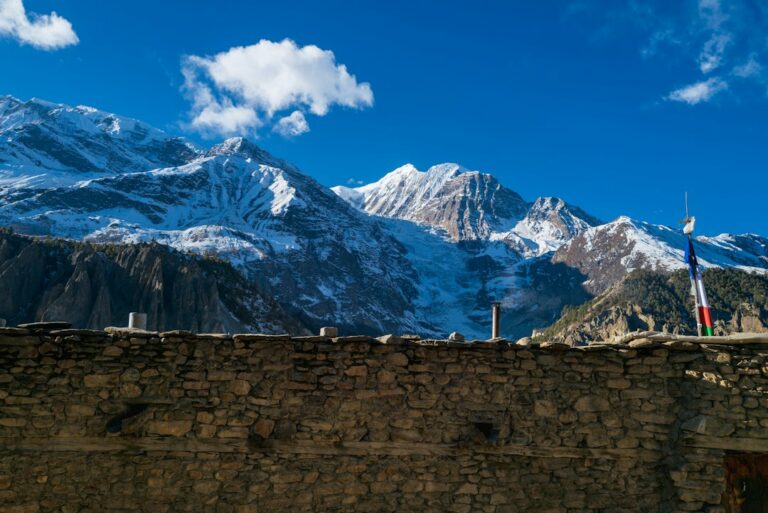
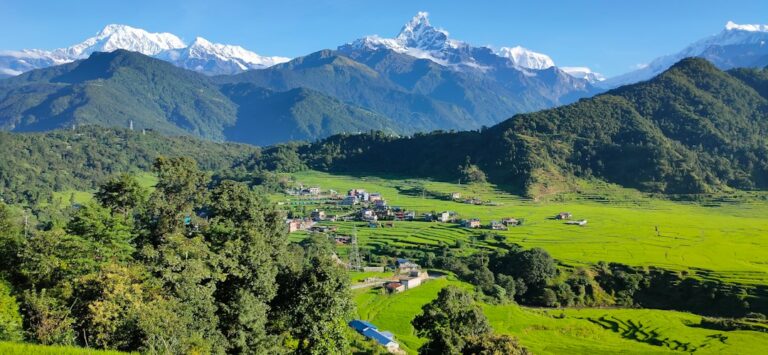
In the late afternoon, out to Tundikhel, a flat grassy shelf at the end of the ridge that was once the parade ground. From it the Himalaya runs along the northern horizon: Dhaulagiri, Annapurna, Manaslu, Ganesh Himal and Langtang.
-
Day 2: Bandipur: Siddha Gufa and the villages below the ridge 1,030 m 6 to 7 hours walking hrs Heritage guest house, breakfast included Breakfastanddinner
Out early for sunrise from Tundikhel if the sky is clear, then breakfast.
Siddha Gufa
An hour's walk down from the ridge, then a scramble to the mouth. It is one of the largest caves in Nepal, around 437 m deep with a chamber about 50 m high, and it is unlit, so head torches matter. Bats. It is not a developed show cave and the footing is uneven.
The villages
In the afternoon, a gentle walk out to Ramkot, a Magar village of round thatched houses about two hours away on a ridge path, or a shorter loop through the terraces if you have had enough uphill. No permits are needed for any of this because you are on village trails rather than in a conservation area.
-
Day 3: Manakamana by cable car, on to Gorkha 1,302 m 5 hours hrs Three star hotel, breakfast included Breakfastanddinner
Back down to the highway and east a little to Cheres, where a cable car runs up to Manakamana at 1,302 m. Ten minutes in the car instead of a three hour climb.
Manakamana is a Hindu temple to Bhagwati, and among the busiest pilgrimage sites in Nepal because the goddess is held to grant wishes. It is loud, crowded and entirely alive, which is the point of going. Saturdays and Tuesdays are the heaviest days. Animal sacrifice is part of the practice here and is visible, so decide in advance whether you want to be near it.
Then north to Gorkha, about two hours, and check in.
-
Day 4: Gorkha Durbar and the Gorkha Museum 1,430 m 6 hours hrs Three star hotel, breakfast included Breakfastanddinner
Gorkha Durbar
About 1,500 stone steps up from the town, or a shorter approach by vehicle and then a climb. The complex at the top is palace, fort and temple at once. Prithvi Narayan Shah was born here and ruled from here, and in 1743 he began the campaign that took the Kathmandu valley twenty five years later and created the state that became Nepal.
The Kalika temple inside is closed to non Hindus, and photography is not permitted in parts of the complex. The view along the Himalaya from the courtyard is one of the best in the middle hills, with Manaslu at 8,163 m directly north.
The Gorkha Museum
In the restored Tallo Durbar below, a Newar style palace building from the early 1800s. Weapons, court dress, documents and a clear account of the unification for anyone who wants the story properly.
The afternoon is free in the town.
-
Day 5: Gorkha to Kathmandu or Pokhara 1,400 m 3 to 5 hours driving hrs Not included on the last night Breakfast
Breakfast, then the drive. Kathmandu is about five hours east. Pokhara is about three and a half hours west, and if you are carrying on to a trek in the Annapurna that is the sensible direction.
Either is included. Tell us which when you book.
Altitude profile
The climb, day by day
Comfort tiers
Choose your level of comfort
| Amenity | Standardfrom $625.00 | Comfortfrom $737.50 | Luxuryfrom $906.25 |
|---|---|---|---|
| Kathmandu hotel | 3★ | 4★ | 5★ |
| Trail accommodation | Standard teahouse | Best lodge in each village | Premium lodge where the route has one |
| Porter support | Shared porter | Private porter, lighter load | Extra porter, carry almost nothing |
| Transfers | Shared | Private | Private, throughout |
What's included
Included
- Included: All ground transport by private tourist vehicle
- Included: Four nights accommodation with breakfast, including a heritage guest house in Bandipur
- Included: Dinner on days 1 to 4
- Included: Government licensed English speaking guide throughout
- Included: Manakamana cable car return ticket
- Included: Siddha Gufa entry and a local cave guide
- Included: Gorkha Durbar and Gorkha Museum entry fees
- Included: Head torch hire for the cave
- Included: All government taxes and administrative charges
Not included
- Not included: Accommodation in Kathmandu or Pokhara before and after the tour
- Not included: Lunch on all days
- Not included: Any beverages
- Not included: Tips for your guide and driver
- Not included: Nepal entry visa, obtainable on arrival at Tribhuvan International Airport
- Not included: Travel insurance
- Not included: Anything not listed under what is included
Know before you go
Suitability & requirements
There is real walking on this tour, including about 1,500 steps at Gorkha and a rough descent to the cave, but no altitude and no camping. If steps are a problem, tell us and we will use the vehicle approach to Gorkha Durbar and shorten the cave day.
Your team
Led by a licensed guide
Every route is led by a government-licensed guide from our team. Licences are on record with us before departure, and you'll meet your guide once your trip is confirmed.
Guide language(s): English, Nepali
Group-size pricing
Walk together, pay less
Every trip is private, so the guide, permits and transfers cost the same however many walk. Sharing them is why the per-person price falls: arithmetic, not a sale.
| Group size | per person | You save each |
|---|---|---|
| 1 trekker | $625.00 | base rate |
| 2 to 3 trekkers | $520.00 | $105.00 |
| 4 to 6 trekkers | $490.00 | $135.00 |
| 7 or more | $460.00 | $165.00 |
Per person, including permits, park fees and taxes. Nothing is added at checkout.
Weather
What to expect, month by month
- Autumn (Sep–Nov)The most reliable trekking season: clear air, stable weather and cold nights, right after the monsoon clears.
- Spring (Mar–May)Warmer than autumn, with rhododendron forests in flower and slightly hazier mountain views as the season goes on.
- Winter (Dec–Feb)Cold and quiet, with the clearest skies of the year at lower altitude. High passes and very high routes are best avoided.
Traveller reviews
What trekkers say
Why book with us
Every trail, one licensed team
You may also like