
This guide is about Nepal itinerary 7 days, written from what we see on the trail every season.
In this article
Table of contents
Seven nights is enough to see the best of Nepal without trekking: the heritage sites of the Kathmandu valley, a night on the valley rim at Nagarkot, two nights beside Chitwan National Park for rhino and river, and Pokhara under the Annapurna range. Counting your arrival and departure days that is eight days on the calendar, and it is the route of our Kathmandu, Chitwan and Pokhara Tour, from US$795 per person for 2 travellers.
Below is the plan day by day, what the long drives really cost you in time, the months it works best, and what to budget on top.
Who this week suits
This plan is for a first visit when you want variety rather than a single big goal. You get cities, temples, wildlife and mountain views in one loop, and there is no trekking involved. We grade it Easy, and the highest point is Nagarkot at 2,195 m.
If your heart is set on walking in the mountains, a week is short. Skip down to the section on adding a trek.
The week, day by day
Day 1: arrive in Kathmandu (1,400 m). Someone from our team meets you at Tribhuvan International Airport and drives you to your hotel in Thamel or Boudha, whichever you prefer. Your guide comes by in the evening to walk through the week and confirm departure times. If you land early, the Boudhanath kora at dusk is a gentle way into the country.
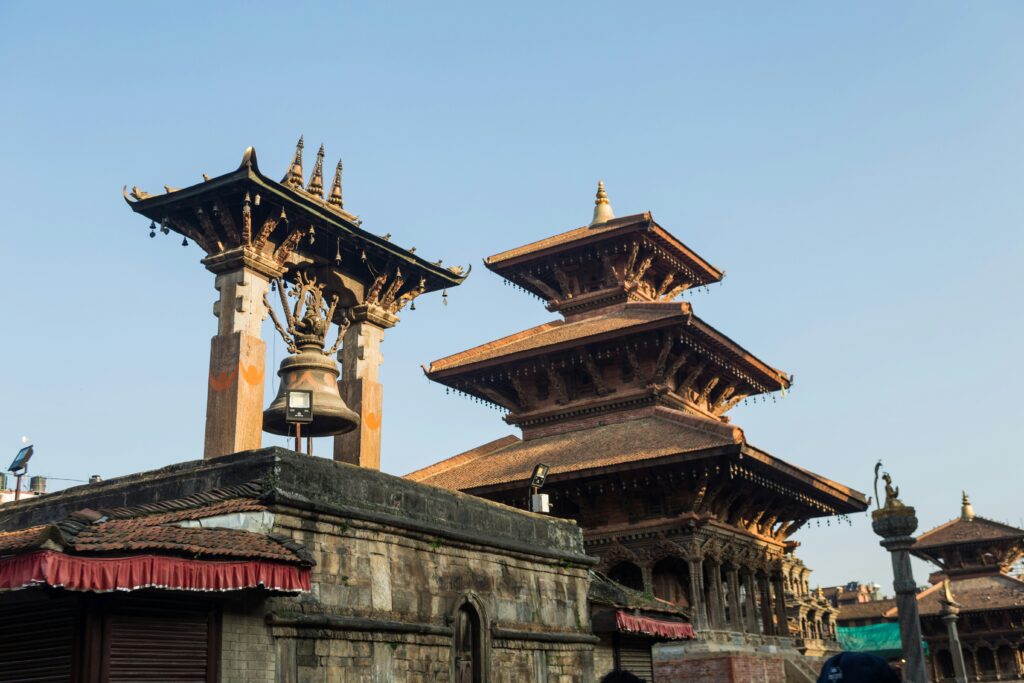
Day 2: Kathmandu heritage. A full guided day across four UNESCO sites: Durbar Square in the morning, then Swayambhunath on its hill, then Pashupatinath on the Bagmati after lunch, and Boudhanath last, when the pilgrims come out to walk the circuit at the end of the day. Pashupatinath is a working Shiva temple where cremations take place in the open, so your guide will tell you where a camera is and is not welcome. Expect 8 to 9 hours.
Day 3: Patan, Bhaktapur and Nagarkot. Patan in the morning for the Krishna Mandir, the old palace museum and the Golden Temple. Bhaktapur in the afternoon, on foot because vehicles stop at the gate: Durbar Square, the Palace of 55 Windows, the five tiered Nyatapola and Potters’ Square. Then half an hour up the hill to Nagarkot for sunset and a night on the ridge. That makes six of the valley’s seven UNESCO sites by the end of day three.
Day 4: Nagarkot sunrise, then Chitwan. Up before dawn for the ridge. On a clear morning a long line of Himalaya runs across the northern horizon. After breakfast you drive down through the valley and onto the Terai plain, about 190 km and 6 to 7 hours depending on traffic. Chitwan sits at 150 m, so it is noticeably warmer and more humid than Kathmandu. Your naturalist guide briefs you that evening.
Day 5: Chitwan National Park. A jeep safari into the park, a dugout canoe down the Rapti and a guided walk on foot with two naturalists. In the late afternoon you visit the elephant breeding centre at Khorsor, and in the evening there is a Tharu cultural programme in the village.
On wildlife, we will be straight with you: Chitwan has greater one horned rhino in real numbers, and the canoe is the best way to see gharial and mugger crocodile. Tigers live in the park but are seen rarely. Anyone who promises you a tiger is selling something.
Day 6: drive to Pokhara. An optional bird walk along the river before breakfast, then 5 to 6 hours north west, about 165 km, climbing back up to 820 m. The afternoon is free. Lakeside is a good place to do very little.
Day 7: Sarangkot and Pokhara. An early start for Sarangkot at 1,600 m, where Dhaulagiri, Annapurna South, Annapurna I, Hiunchuli and Machhapuchhre stand in a line. Then breakfast, Devi’s Fall, the Gupteshwor cave, the International Mountain Museum, and the World Peace Pagoda above the lake for the late afternoon.
Day 8: back to Kathmandu. The drive is 6 to 7 hours and about 200 km, and it is included. You can also take the 25 minute flight instead, which is not included and costs about USD 120 per person. We drop you at the airport for your flight home, or at a hotel if you are staying on.
The honest trade-off: three long drives
Days 4, 6 and 8 are driving days, roughly 17 to 20 hours on the road across the week. The highway scenery is part of the experience, and you travel in a private vehicle, but it is a real cost in time.
If you are flying home on day 8, book an evening flight and take the short flight from Pokhara, or add a night in Kathmandu so you are not racing the clock. We will quote the extra night if you ask.
If the amount of driving worries you, tell us when you get in touch and we will talk through the options.
When to go
October to February is the best window for both the jungle and the mountain views from Nagarkot and Sarangkot. March to May works, but Chitwan is very warm. During the monsoon the park partly closes while the grass is high and the rivers are up. Our guides to the best time of year to go season by season and to December in Nepal go into more detail on each season.
What the price covers, and what it does not
Our private tour price covers:
- All ground transport by private tourist vehicle, including the drive back on day 8
- Seven nights: three star hotels in Kathmandu, Nagarkot and Pokhara with breakfast, and a jungle lodge in Chitwan
- All meals at Chitwan, and breakfast elsewhere
- A government licensed English speaking guide throughout
- Chitwan park permits and the listed jungle activities with a naturalist
- Entry fees for every heritage site on the itinerary, plus the Sarangkot and Nagarkot viewpoint fees
- All government taxes and administrative charges
Budget separately for:
- International flights
- Lunch and dinner in Kathmandu and Pokhara, about USD 15 to 25 per person per day
- Drinks, including bottled and boiled water
- Tips for your guide, driver and lodge staff
- The optional Pokhara to Kathmandu flight, about USD 120 per person
- Travel insurance, which we ask every traveller to carry. Our travel insurance guide explains what to look for.
The price is quoted as from US$795 per person for 2 travellers. Comfort adds 18 percent and Luxury adds 45 percent, with better hotels and more room in the vehicle. Every departure is private, so the dates and the pace are yours. If you are travelling on your own, tell us, and you can ask to be paired with other travellers on the same route.
Visa and arrival
Most visitors get a tourist visa on arrival at Tribhuvan International Airport. The published fees are US$30 for 15 days, US$50 for 30 days and US$125 for 90 days, and Indian nationals do not need a visa. Fees and rules can change, so check the current figures with the Department of Immigration before you fly. Whether you need a visa, and which one, depends on your passport, so confirm that early.
If you have more than a week
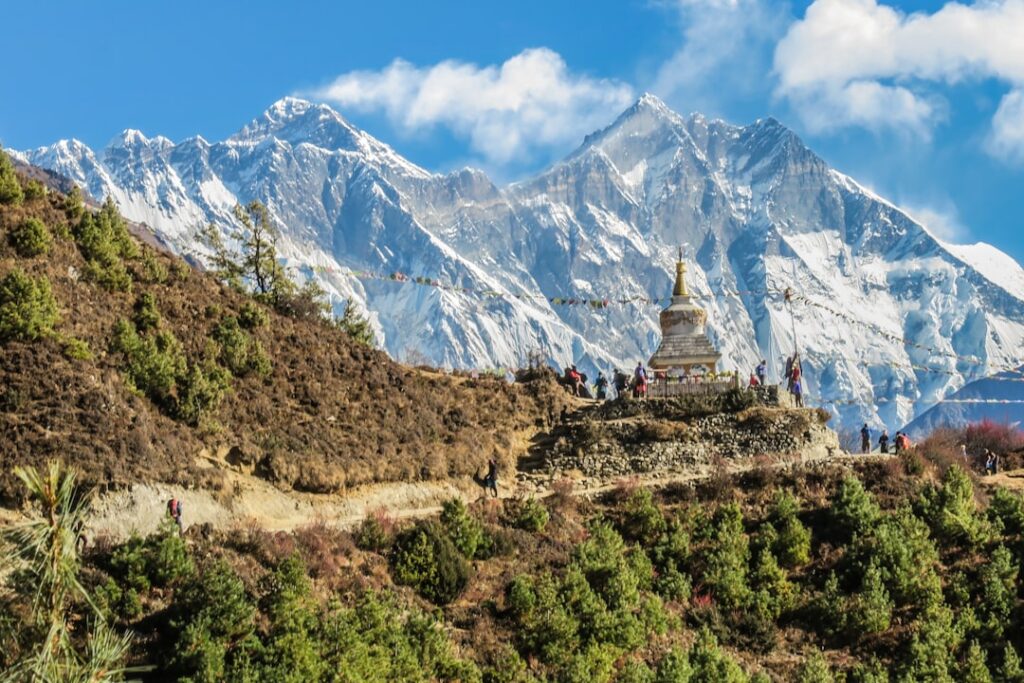
Extra days are best spent on a short walk. The Ghorepani Poon Hill route is the easiest way to see the Annapurnas up close, and our Poon Hill guide for first-timers shows what a first trek feels like day by day.
For a longer loop, the 15 day Experience Nepal Tour adds Lumbini, Tansen and a four day teahouse trek to Poon Hill. If you want more adrenaline, the 11 day Discover Nepal Adventure Tour adds Trishuli rafting and optional paragliding and bungee.
If you would like to spend longer in the capital first, here is our relaxed Kathmandu 3 day itinerary.
Ready to plan your week?
Your booking is confirmed as soon as payment goes through, and we then collect what we need and introduce your guide before you travel. You can read how it works in our post on how booking a private trip works.
Start with the Kathmandu, Chitwan and Pokhara Tour, or tell us your dates and how you like to travel through our contact page, and we will help you shape it.
Sources: Soulful Nepal Holidays trip data for the Kathmandu, Chitwan and Pokhara Tour; visa fees as published by Lonely Planet (lonelyplanet.com/articles/visa-requirements-for-nepal), based on Nepal’s Department of Immigration. Please confirm current fees with the Department of Immigration.
Nepal itinerary 7 days: next steps
Use this Nepal itinerary 7 days to shortlist your dates, then message us. We will check the Nepal itinerary 7 days details against the season, the permit rules and your group before you commit to anything.
Questions about Nepal itinerary 7 days that this page did not answer? Ask us and we will add the answer here.
A good Nepal itinerary 7 days should leave you able to plan, and ours is built for that. Read the Nepal itinerary 7 days once through, check the key details, then compare it with the trip page.
Our team is a member of TAAN, Nepal’s trekking agents association. If this Nepal itinerary 7 days raised a question, ask us. A short recap of the Nepal itinerary 7 days: check the season, check the permits, and plan the days before the price.