
This guide is about Tsum Valley trek guide, written from what we see on the trail every season.
In this article
Table of contents
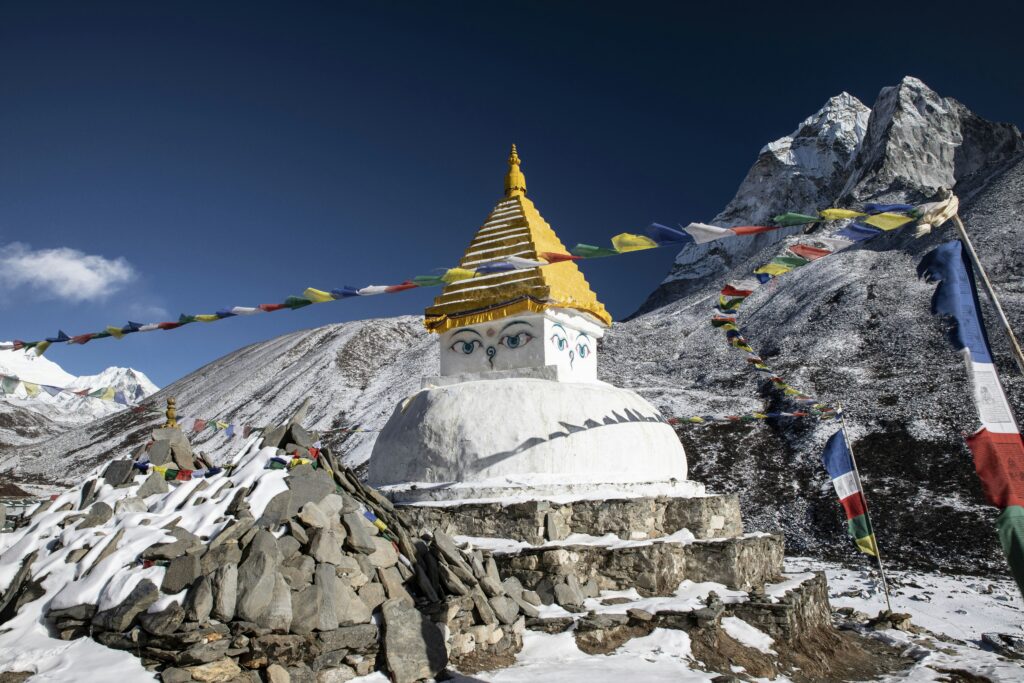
Tsum Valley sits in a side fold off the Manaslu trail, close to the Tibetan border. It was closed to outside visitors until 2008, and it still feels like a place apart. The people here are Buddhist, the monasteries are the centre of village life, and by local custom nobody hunts, which is why blue sheep can still be seen from the trail.
This guide covers what our 16-day Tsum Valley Trek is actually like, so you can decide if it suits you.
The short version
Our Tsum Valley Trek runs 16 days from Kathmandu and back. We grade it Strenuous. The highest point is Mu Gompa at 3,700 m, and you sleep in teahouses for 13 nights. The best seasons are autumn (September to November) and spring (March to May).
Every departure is private and led by a government-licensed, English-speaking guide.
Why it is graded Strenuous
The altitude is not extreme by Himalayan standards. The effort comes from the length and the terrain. Most trekking days are five to seven hours, the trail climbs and drops again several times, and the drives at each end are long.
Day five to Chumling is a good example. It is a tiring day of ups and downs, down to the Lungwa Khola, up through pine forest, then across the Siyar Khola. Good general fitness and some practice walking uphill for hours will make the trek more enjoyable. If you are weighing it against other routes, our guide to trekking difficulty levels in Nepal explains how we grade things.
The route in stages
Getting there. After a night in Kathmandu, a private 4WD takes you to Machha Khola (869 m). It is a nine to ten hour drive: about three hours on paved road to Dhading Besi, then five to seven hours on a bumpy dirt road. It can be slow after rain, so treat the day as part of the journey.
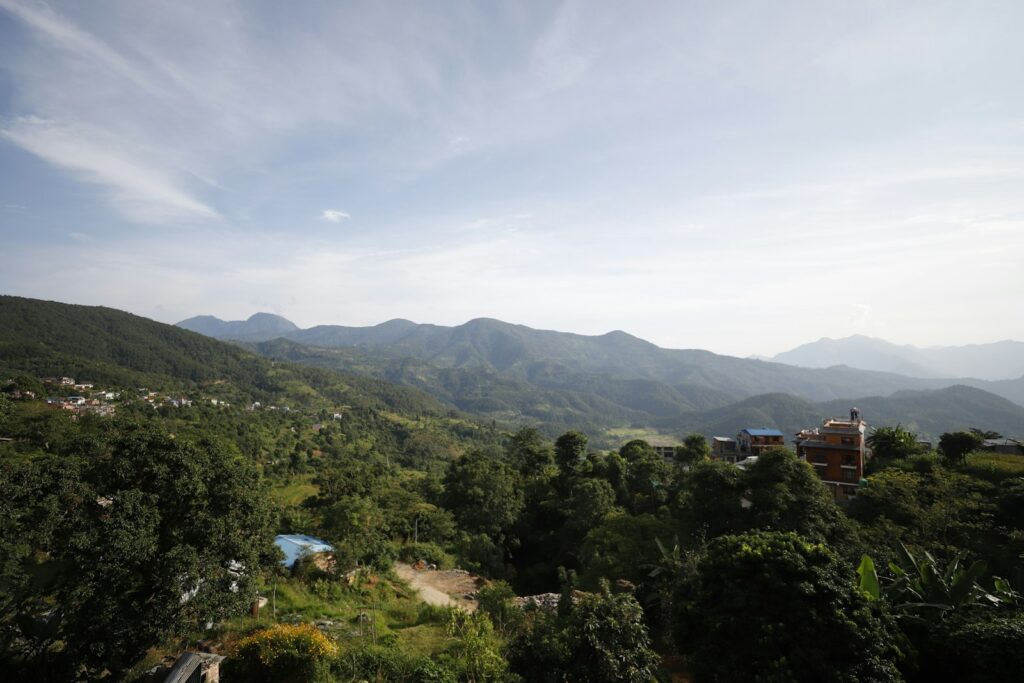
The Budhi Gandaki gorge. The next two days follow the river to Jagat (1,340 m) and then Lokpa (2,240 m), the entrance to the Tsum Valley. You pass a small hot spring at Tatopani, forests of pine and rhododendron, and the Gurung village of Philim.
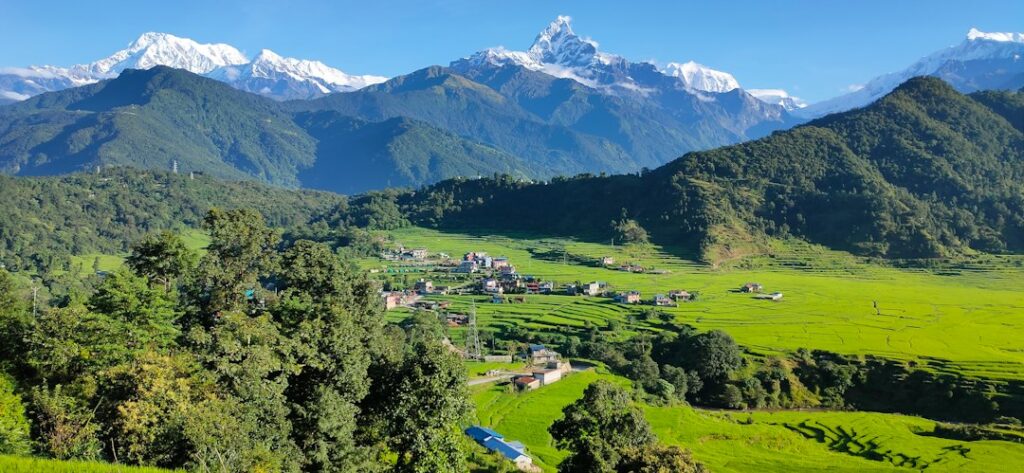
The lower valley. From Lokpa you reach Chumling (2,386 m), known for its gompa and stone-paved lanes. Next comes Chhokhang Paro (3,031 m), with views of Ganesh Himal along the way.
The upper valley. The walk to Nile (3,361 m) passes Rachen Gompa, a nunnery, and several villages with their own monasteries. The following day you reach Mu Gompa (3,700 m), the largest monastery in the valley and the highest point of the trek. There is a full rest day here, with the option for strong walkers to go further towards the base of Pika Himal.
The way back. You descend via Burgi (3,245 m) and Milarepa’s cave, then Chumling again, Philim, Khorlabesi and Machha Khola. The last drive to Kathmandu is another nine to ten hours, followed by a farewell dinner.
Altitude and pacing
Sleeping heights rise gradually, and the rest day at Mu Gompa gives your body time at the top of the route. Even so, anyone can be affected at altitude, regardless of fitness. Your guide checks everyone regularly and carries an oximeter and medical supplies. Read our page on preventing altitude sickness on Nepal treks before you go. This is general information only, and you should talk to your own doctor about your health and the trip.
Permits and the guide rule
Tsum Valley is a restricted area, so you cannot walk it without a licensed guide, and the permit must be arranged through a registered agency. We do this for you. The price includes the Restricted Area Permit, the Manaslu Conservation Area Permit and the Chumnubri Rural Municipality local permit.
In March 2026, Nepal’s immigration department began issuing restricted area permits to solo travellers as well, where before they were given only to groups of two or more. A licensed guide is still required. Rules like this can change, so ask us for the current position when you enquire. For the wider picture, see our guide to Nepal trekking permits.
What it costs
The price per person depends on group size: US$1,570 for one traveller, US$1,310 each for two or three, US$1,230 each for four to six, and US$1,155 each for seven or more. That includes the permits, the guide, one porter for every two travellers, meals on the trek, hotel nights in Kathmandu and the private 4WD. International flights, visas, travel insurance with high-altitude evacuation cover, drinks and tips are not included. Check the trip page for the full list.
Tsum Valley or the Manaslu Circuit?
The two overlap, because Tsum is a side valley off the Manaslu route, and the trek can be combined with the circuit. Tsum is slower and more cultural, with an out-and-back shape and monasteries as the main attraction. The circuit is a bigger, higher crossing. Our Manaslu Circuit guide will help you compare them.
Is it right for you?
Tsum Valley suits travellers who are happy with long days, simple teahouses and rough roads, and who want culture and quiet more than a famous summit view. If you want something shorter and easier, a different route may be a better first step.
Not sure? Get in touch and we will help you plan it around your dates and fitness.
Sources: our Tsum Valley Trek page; The Kathmandu Post, 22 March 2026.
Tsum Valley trek guide: next steps
Use this Tsum Valley trek guide to shortlist your dates, then message us. We will check the Tsum Valley trek guide details against the season, the permit rules and your group before you commit to anything.
Questions about Tsum Valley trek guide that this page did not answer? Ask us and we will add the answer here.
A good Tsum Valley trek guide should leave you able to plan, and ours is built for that. Read the Tsum Valley trek guide once through, check the permit section, then compare it with the trip page.
Our team is a member of TAAN, Nepal’s trekking agents association. If this Tsum Valley trek guide raised a question, ask us. A short recap of the Tsum Valley trek guide: check the season, check the permits, and plan the days before the price.