
Island Peak, known locally as Imja Tse, is the route most trekkers use to find out whether they want to become climbers. At 6,189 metres, it’s a genuine Himalayan summit requiring rope, ice axe and crampon skills, but it doesn’t demand prior mountaineering experience, which makes Island Peak Climbing one of the most accessible 6,000-metre peaks in the Everest region.
In this article
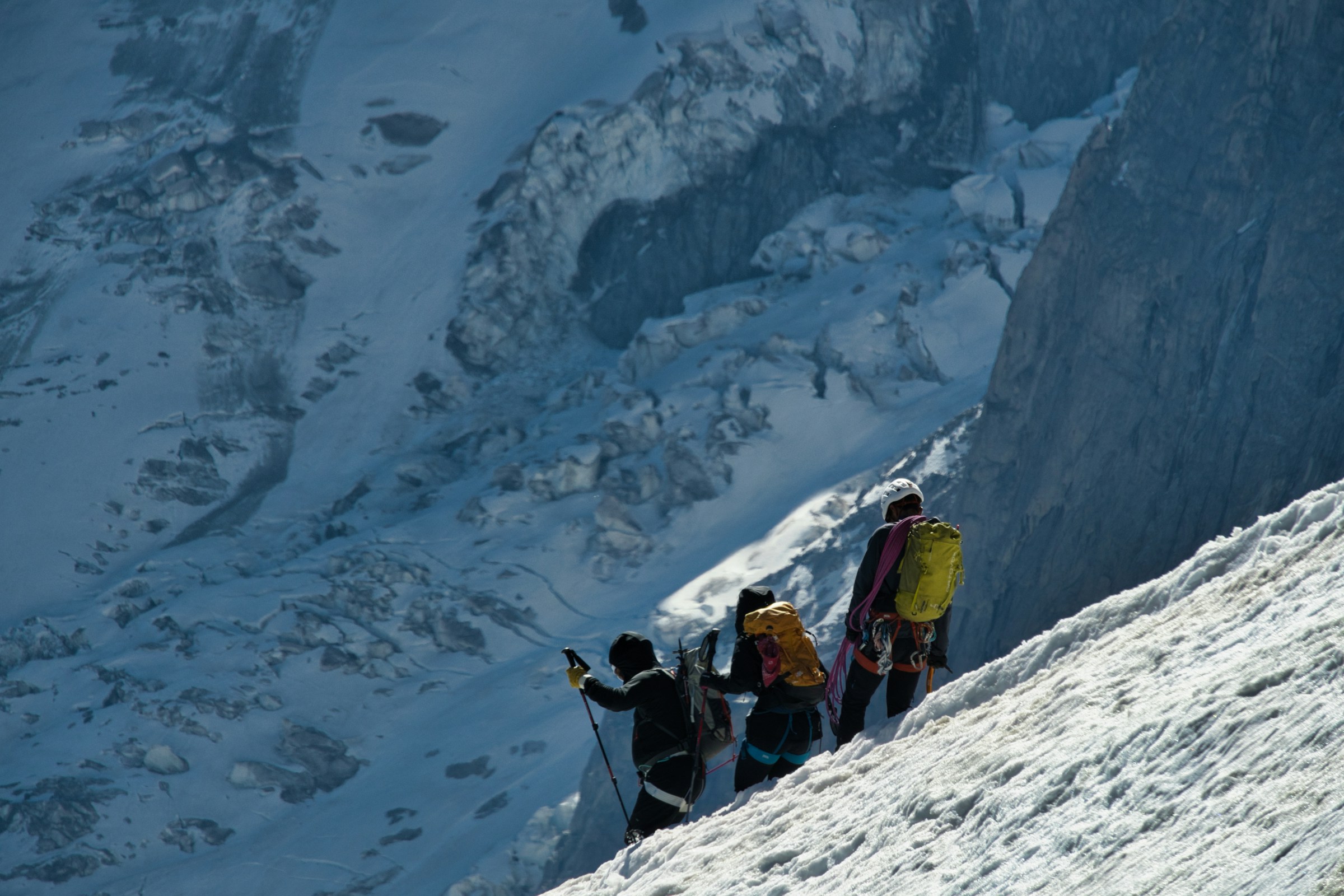
What makes it a climb, not a trek
The approach is a standard Khumbu trek, following the Everest Base Camp route as far as Dingboche before turning east up the Imja valley to Chhukung. The climb itself starts above base camp: a steep scramble to the crampon point, then a roped glacier crossing and a fixed-rope ascent of the headwall to the summit ridge, using an ascender, ice axe and crampons the whole way. It’s technical enough to need real preparation, but short enough in duration that most climbers manage it as their introduction to mountaineering rather than a career commitment.
Itinerary, day by day
- Day 1: Arrive in Kathmandu (1,400 m) and meet your guide.
- Day 2: Fly to Lukla (2,840 m), from Ramechhap in peak season, and trek to Phakding (2,610 m).
- Day 3: Trek to Namche Bazaar (3,440 m), 5 to 6 hours.
- Day 4: Acclimatisation day in Namche, with a hike up toward the Everest View Hotel.
- Day 5: Trek to Tengboche (3,860 m), 5 to 6 hours.
- Day 6: Trek to Dingboche (4,410 m), 5 to 6 hours.
- Day 7: Trek to Chhukung (4,730 m), 3 to 4 hours, with a briefing on the climb.
- Day 8: Trek to Island Peak Base Camp (5,240 m) and move into tents.
- Day 9: Rest, acclimatisation and rope training at base camp with your climbing sherpa.
- Day 10: Summit day: a very early start, the top at 6,189 m, and back down to Chhukung, 10 to 12 hours.
- Day 11: Descend to Tengboche (3,860 m), 6 to 7 hours.
- Day 12: Trek to Namche Bazaar via Khumjung, 5 to 6 hours.
- Day 13: Trek to Lukla (2,840 m), 6 to 7 hours.
- Day 14: Fly back to Kathmandu, with a farewell dinner.
- Day 15: Departure.
A note on timing: this 15-day plan has no spare day for bad weather on the summit or at Lukla. If you can, keep a buffer day or two in Kathmandu before your flight home, and tell us when you book so we can build it in. If you have never been above 5,000 m before, ask us about adding a rest day in Dingboche; it costs one day and makes the summit much more likely.
Training and fitness
Your climbing sherpa goes over the technical skills (fixed-rope ascent and descent, crampon technique, basic ice axe use) on the training day at base camp before the summit push, so no prior climbing course is required. What matters more going in is cardiovascular fitness and time already spent above 4,000 m, which is why the climb sits at the end of a week of Khumbu trekking rather than being attempted cold. Trekkers who come straight from sea level with no altitude exposure tend to find the technical skills easy and the altitude hard; the slow approach is built to reverse that.
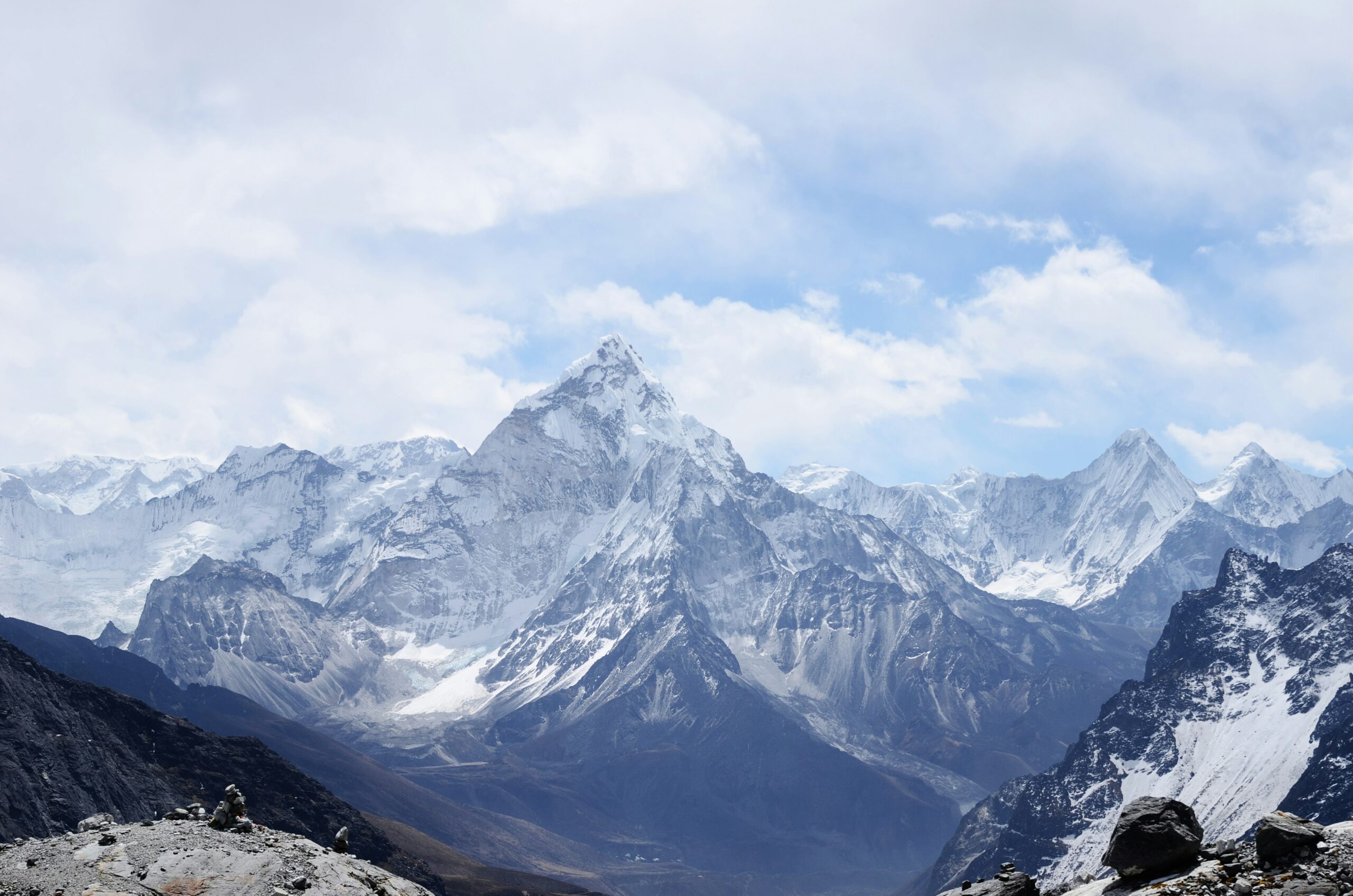
The view from the top
Island Peak sits in the upper Imja valley directly beneath the south face of Lhotse, so the summit view is dominated by the Lhotse wall, with Makalu, Baruntse and Ama Dablam around you. Everest sits largely behind the Lhotse and Nuptse ridge from here, so don’t expect the classic full-face view, but very few places put a first-time climber this close to an 8,000-metre face.
Best time to climb
Autumn and spring are the standard climbing seasons here, with stable weather windows for the summit push and the lowest avalanche risk on the headwall. Winter climbing is possible for experienced parties but the cold at base camp and on the summit ridge becomes a serious factor; monsoon is avoided entirely, since cloud and precipitation make the fixed-rope sections unsafe.
Cost and what’s included
The price is per person: 2,020 USD each for two or three climbers, 2,425 USD for a solo climber, 1,900 USD each for four to six, and 1,780 USD each for seven or more. It includes the Island Peak climbing permit, the Sagarmatha National Park permit and the Khumbu Pasang Lhamu rural municipality entry permit, return flights to Lukla, a government-licensed trekking guide, a climbing sherpa from base camp to the summit and back, one porter for every two climbers, full board on the trek, tented camp at base camp, group climbing gear such as fixed rope, ice screws and snow bars, a farewell dinner, and two nights in a three-star Kathmandu hotel with breakfast. The full breakdown is on the Island Peak Climbing page.
Other entry-level peaks
If Island Peak’s technical headwall sounds like more than you want for a first climb, Lobuche East is a comparable alternative with its own character, also reached via the Khumbu approach. Both are genuine mountaineering objectives, not trekking peaks in name only, and both carry the same expectation of solid trekking fitness even though neither requires prior technical climbing experience.
Packing, gear and altitude
Much of our Everest Base Camp packing list applies here too. Personal climbing gear is not included in the price: you’ll need mountaineering boots, a harness, crampons, an ice axe, a helmet, and an ascender with a descender. Most climbers rent these in Kathmandu or in Chhukung on the way up, and your guide checks the fit before base camp. Altitude management follows the same descent-first principle covered in our altitude sickness guide, with the base camp training day doubling as extra time to adjust.
Booking
Every climb is private and arranged around your own dates. See how booking works, or contact us with your climbing experience and travel dates so we can plan the right acclimatisation schedule for you.